International partners fund medical equipment procurement in Afghanistan
By Modern Medical Solutions Editorial Team
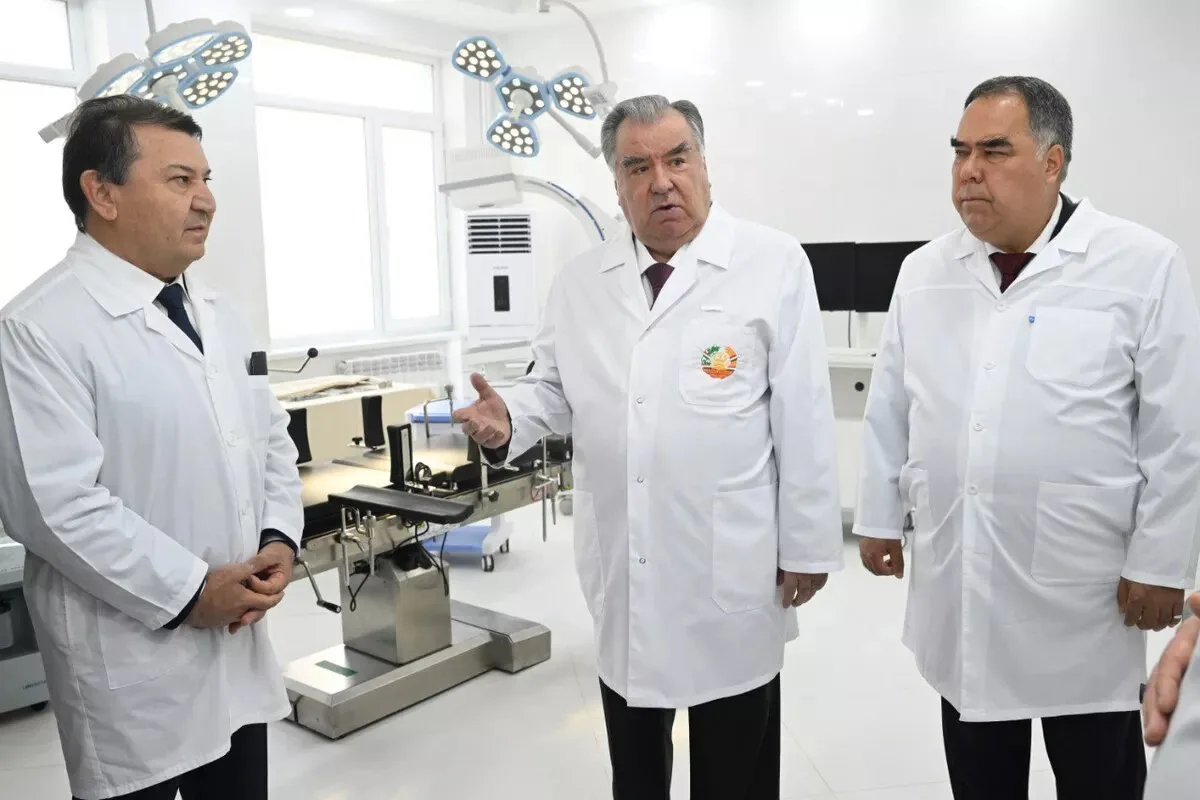
A multi-donor fund administered through the MoPH has allocated resources for structured procurement of essential medical devices, prioritising cardiology, obstetrics and emergency care equipment for 48 district hospitals.
A Pooled Fund For Essential Devices
Pooled financing arrangements have become a common instrument for equipping health systems where individual budgets are stretched thin. A multi-donor fund administered through the MoPH, allocating resources for structured procurement of essential medical devices, follows a well-established template. By channelling several contributions through one ministry-led mechanism, such funds aim to reduce fragmentation and give recipients a coherent programme rather than a patchwork of separate, uncoordinated donations that pull in different directions.
The prioritisation of cardiology, obstetrics and emergency care equipment for 48 district hospitals signals a focus on high-burden clinical areas. District hospitals are the workhorses of any system, and equipping them for common cardiac, maternal and emergency presentations tends to deliver broad population benefit relative to concentrating resources in a few specialist centres. The choice reflects a population-level view of where devices translate most directly into care that people can actually reach.
What Structured Procurement Changes
The word structured carries real weight in this context. Structured procurement implies standardised specifications, competitive selection, defined delivery schedules and accountability for outcomes, in contrast to reactive purchasing driven by immediate crises. This approach usually lowers unit costs through volume, simplifies training because facilities receive comparable equipment, and eases maintenance because spare parts and technician skills can be shared across a common fleet rather than fragmented across incompatible models.
For a ministry coordinating across dozens of hospitals, standardisation is also a powerful management tool. When 48 facilities operate similar devices, national servicing contracts, bulk consumable orders and pooled biomedical expertise all become feasible. The alternative, a scattered inventory of incompatible models acquired through separate channels, quietly multiplies long-term cost and complexity in ways that rarely appear in the initial purchase price but dominate the total cost of ownership.
Governance And Accountability In Pooled Funds
Pooled funds live or die on the quality of their governance. Clear rules on how resources are allocated, transparent procurement processes and credible reporting are what persuade donors to keep contributing year after year. Ministry administration can strengthen national ownership and align purchasing with health priorities, but it also concentrates responsibility, making the quality of oversight decisive for the programme's reputation and its ability to attract continued support.
From an operations perspective, the risk to watch is the gap between allocation and functioning equipment. Funds can be committed and devices delivered while installation, training and maintenance lag well behind. Robust programmes track not just procurement completion but device uptime months later, because a delivered monitor that sits uncalibrated in a storeroom represents spending without service, and enough such cases can quietly undermine confidence in the whole mechanism.
Cardiology, Obstetrics And Emergency Priorities
The three prioritised areas share a common feature that makes them sensible choices: timely intervention changes outcomes decisively. Emergency and obstetric care in particular reward the presence of functioning equipment at the exact moment of need, while cardiology capacity at district level supports earlier detection and stabilisation before referral becomes necessary. Concentrating on these domains reflects a pragmatic reading of where devices translate most directly into lives managed closer to home.
Realising that benefit still depends heavily on the enabling environment around the equipment: staff trained to use it, consumables held in stock, and referral links to higher levels when cases exceed district capacity. Equipment is necessary but never sufficient on its own, and a programme that procures well while neglecting these surrounding conditions will fall short of its clinical promise.
The Sustainability Question After Year One
The most searching question about any donor-funded procurement is what happens when the fund eventually closes. Devices have running costs, finite lifespans and eventual replacement needs that do not disappear with the donor. Programmes that plan for domestic maintenance financing and technician development from the very start give equipment a realistic chance of serving out its useful life; those that do not risk a slow wave of non-functional devices within a few years of the handover.
Sustainability is therefore as much an institutional question as a financial one. Building the ministry's own capacity to manage a device fleet, through trained biomedical staff, maintenance contracts and honest asset registers, is the quiet legacy that outlasts any single funding round and any individual shipment of equipment. A programme that leaves behind this capability achieves something more durable than any list of delivered items, because it changes how the system handles every future acquisition.
Distribution Discipline Behind Every Delivery
Behind a structured procurement programme sits a long chain of unglamorous logistics: certification checks, customs clearance, warehousing and last-mile delivery to district facilities that may be difficult to reach. Weakness at any point delays care. Experienced regional distributors treat these steps as a single continuous process rather than isolated tasks, which is why import and clearance expertise matters as much as the purchasing decision itself.
A distributor's role is to make delivery predictable, so that ministries and hospitals can schedule services around confirmed arrivals rather than hopeful estimates. Predictability, more than speed, is what allows a health system to plan the training, staffing and consumable ordering that a new device requires to be genuinely useful.
Reading The Programme As An Operations Story
Viewed through an operations lens, this allocation is less about money and more about systems working in concert. The fund's lasting value will depend on whether it builds standardised, maintainable, well-staffed device capacity across 48 hospitals, or simply moves equipment into buildings where it may or may not be used. The distinction is easy to overlook at the announcement stage yet decisive by the third year, and it is precisely where thoughtful programme design earns its keep.
For distributors and suppliers who work with the region's health systems, programmes framed around functioning capacity rather than headline volumes are the more workable partners. They plan realistically, value reliability over the lowest possible unit price, and understand that the relationships behind dependable supply, the kind our team and partners invest in, are what keep a fleet of devices serving patients long after the founding announcement has faded from memory.