Ministry strengthens medical device oversight
By Modern Medical Solutions Editorial Team
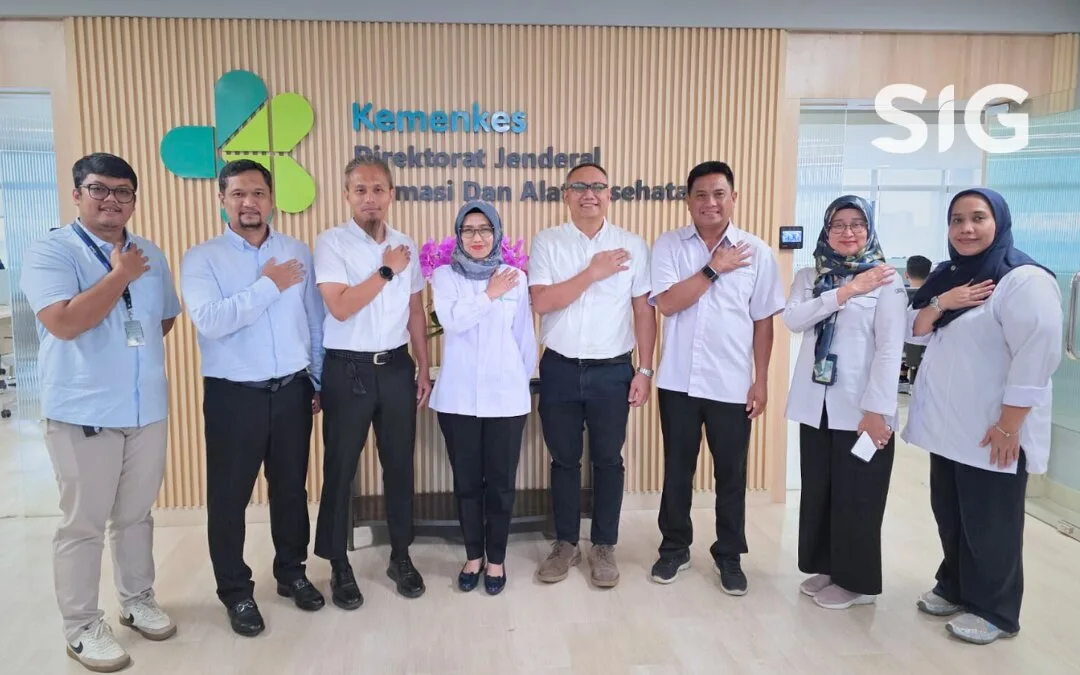
The Ministry of Health continues updating procedures governing medical equipment, pharmaceuticals and healthcare products.
Updated Procedures and Everyday Care
When a health ministry updates the procedures governing medical equipment, pharmaceuticals and healthcare products, the effect eventually reaches the ward and the bedside. Stronger oversight is fundamentally about assurance: that the devices and medicines patients encounter meet defined standards and can be traced back to a responsible source. For clinical service delivery, clearer procedures reduce uncertainty at the point of care, letting teams concentrate on treatment rather than quietly questioning whether a given product is genuinely fit for use.
Oversight also signals consistency, which has value in its own right. When rules are stable and applied evenly across suppliers and facilities, both hospitals and distributors can plan around them with confidence. That predictability supports steadier availability of the equipment and consumables that clinical services depend upon every day, because suppliers are more willing to commit to a market whose expectations they can understand and reliably meet over time.
Coordinating Devices, Medicines and Products
Grouping oversight across devices, pharmaceuticals and general health products reflects how care actually works in practice, since a single procedure may draw on all three categories at once. Coordinated procedures help avoid the dangerous gaps that appear where one category is well governed and another is neglected. Through a service lens, this integration matters because patient safety ultimately depends on the weakest link, and fragmented oversight tends to expose exactly those seams at the worst possible moments.
The analytical observation is that harmonised procedures also ease the administrative load carried by facilities. A hospital dealing with one coherent framework, rather than several conflicting ones, spends far less effort reconciling contradictory requirements and interpreting overlapping rules. That saved effort is not trivial; it frees scarce staff time for clinical work and reduces the compliance fatigue that can, paradoxically, make busy teams less rather than more diligent about safety.
What Does Stronger Oversight Require of Suppliers?
Suppliers respond to tighter oversight by strengthening their documentation, traceability and internal quality systems. Meeting registration and reporting expectations is considerably easier when a distributor already maintains organised technical files and clear, retrievable supply records rather than assembling them reactively under pressure. For regional partners, the practical implication is that good record-keeping is no longer optional but a basic condition of participating in the market at all.
For those partners, engaging early with requirements through regulatory consulting reduces the friction that new procedures inevitably create and helps keep clinical supply uninterrupted. The alternative, waiting until a submission is rejected or a shipment is held, is slower and more costly for everyone involved, and it is patients awaiting equipment who ultimately feel the delay. Preparation, in short, is the cheapest form of compliance available.
Traceability From Import to Bedside
A central aim of modern oversight is traceability: knowing where a product came from, how it was handled in transit and storage, and precisely where it ended up. This unbroken chain supports recalls, incident investigation and general confidence in each item's provenance. For clinical services, traceability is quietly protective, because when a problem emerges the team can identify affected stock quickly and decisively rather than guessing anxiously about which batches might be involved.
Building traceability in from the point of import strengthens the whole chain rather than leaving gaps that must be reconstructed later. Aligning entry documentation with local procedures, with practical help via import support, keeps records coherent from border to bedside and shortens the response time when questions inevitably arise. A well-documented supply line is not merely a regulatory nicety; it is a genuine patient-safety mechanism that only proves its worth when something goes wrong.
Turning Compliance Into Better Care
Oversight only justifies its considerable effort if it improves care rather than simply generating paperwork for its own sake. The strongest frameworks are deliberately designed so that compliance and quality reinforce each other, with reporting that feeds directly back into safer clinical practice rather than disappearing into an archive. When staff can see that their reports lead to real changes, they engage with the system instead of treating it as a burdensome ritual imposed from above.
Facilities that embed these procedures into routine workflow, rather than treating them as separate hurdles bolted on at inspection time, see oversight translate into genuine day-to-day reliability. That alignment between rules and patient outcomes is ultimately the only meaningful measure of whether stronger procedures are working. Regulation that improves the care a patient actually receives has succeeded; regulation that merely fills folders, however diligently, has largely missed its own purpose.
Oversight and Continuity of Supply
Tighter oversight is sometimes feared as a source of shortages, on the assumption that stricter rules will slow the flow of equipment and medicines. In practice, well-designed procedures tend to have the opposite effect over time, because predictable requirements let suppliers prepare in advance and avoid the abrupt interruptions that follow unclear or inconsistently enforced rules. Continuity of supply and rigorous oversight are allies rather than opponents once the system settles into a steady rhythm.
Through a service-delivery lens, the transition period is where care is most exposed. When procedures change, there is a risk that supply stumbles while suppliers adapt, and facilities feel that gap directly at the bedside. The mitigation is early communication and preparation, so that everyone understands the new expectations before they take effect. Handled with foresight, stronger oversight ultimately delivers more dependable supply, not less, by replacing improvisation with a framework that all parties can plan around.
Facilities can protect themselves during such transitions by maintaining sensible buffer stock of critical items and by keeping open dialogue with their suppliers about anticipated changes. Knowing in advance which products may be affected, and roughly when, allows a hospital to plan around a temporary disruption rather than being caught unprepared. This kind of practical coordination between facilities, suppliers and regulators is what keeps essential clinical services running smoothly even as the rules governing them are updated and strengthened over time.
Frequently asked questions
How does device oversight affect hospital procurement?
Stronger oversight means hospitals must confirm that equipment and consumables meet registration and documentation requirements before purchase. This can add steps early in procurement but reduces the risk of ineligible or untraceable products reaching patients. Buyers benefit from working with suppliers who maintain organised technical files and clear records, since coordinated documentation keeps supply steady and shortens the response if a safety question later arises about a particular batch or device.
Why combine oversight of devices, medicines and products?
Care often involves devices, pharmaceuticals and general health products together, so governing them under coordinated procedures avoids gaps where one category is well regulated and another is neglected. Patient safety depends on the weakest link, and harmonised oversight closes the seams between categories. It also reduces the administrative burden on facilities, which then reconcile fewer conflicting requirements and can devote more of their limited time to clinical work rather than paperwork.