Stroke care unit established at Kabul's main neurology centre
Автор: Modern Medical Solutions Editorial Team

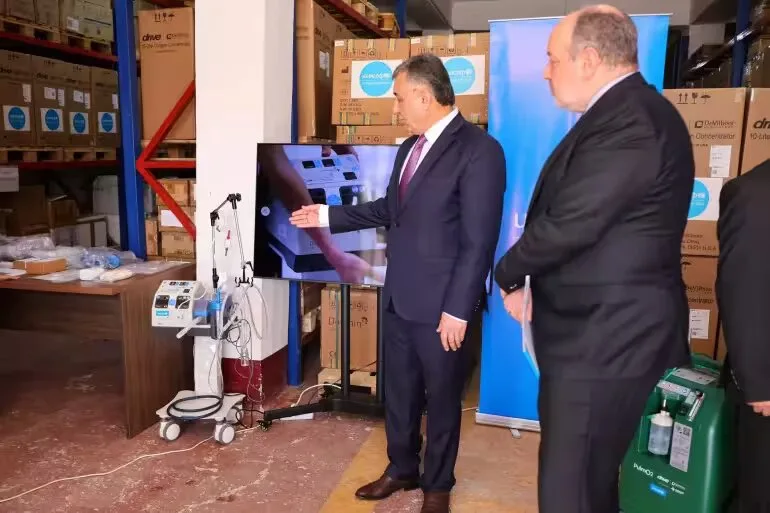
A new acute stroke unit at the Afghan-Japan Hospital, Kabul, is now equipped for mechanical thrombectomy and neurointerventional procedures, giving Afghan neurologists access to microcatheter and guidewire technology for the first time in a structured clinical setting.
A First Structured Stroke Service In Kabul
Acute stroke care is among the most demanding services a hospital can offer, because outcomes hinge on organisation quite as much as on technology. The establishment of a stroke unit at the Afghan-Japan Hospital in Kabul, equipped for mechanical thrombectomy and neurointerventional procedures, gives Afghan neurologists access to microcatheter and guidewire technology in a structured clinical setting for the first time. It marks a genuine step from improvised, case-by-case response toward a dedicated and purpose-built treatment pathway.
The significance lies in the phrase structured clinical setting. Thrombectomy is not a single device but a coordinated system of imaging, decision-making, procedural skill and careful post-procedure care. Assembling these elements deliberately, rather than attempting the procedure in an unprepared environment, is what makes advanced stroke intervention both feasible and safe to introduce, and it is a far harder achievement than acquiring the devices that make the headlines.
How Mechanical Thrombectomy Works
Mechanical thrombectomy is a neurointerventional procedure to remove a clot causing an acute ischaemic stroke, restoring blood flow to the affected part of the brain. It relies on navigating fine instruments through the vasculature to reach the occlusion, which demands specialised single-use consumables and considerable operator skill. Equipping a unit for this work means providing the full family of devices that make safe navigation and reliable clot retrieval possible under time pressure.
Access and navigation depend on neurovascular guidewires and microcatheters engineered specifically for the delicate intracranial vessels. A frontline neuro microguidewire such as the ASAHI CHIKAI illustrates the class of device involved in reaching these vessels safely, giving a sense of the precision instruments a structured unit must keep reliably in stock rather than source improvised alternatives when a case arrives unannounced in the middle of the night.
The Time-Critical Nature Of Stroke Systems
Stroke care is governed above all by time: the sooner blood flow is restored, the better the likely outcome for the patient. This simple fact makes organisation decisive. A functioning unit needs rapid imaging, clear triage protocols, an on-call interventional team and streamlined pathways from arrival to treatment, all rehearsed and ready. Equipment without this operational choreography cannot deliver the benefit that thrombectomy is genuinely capable of providing to eligible patients.
Building such a system is a substantial and continuing undertaking. It requires close alignment across emergency services, radiology and neurology, plus the discipline to maintain full readiness around the clock, every day. The establishment of a structured unit suggests attention to this whole pathway, not merely the acquisition of impressive devices, which is the more difficult and ultimately the more valuable achievement for patients across the region who present with acute stroke.
Developing Neurointerventional Expertise
Neurointervention is a highly specialised discipline with a notably long learning curve. Introducing it for the first time in a structured setting implies a real commitment to developing local expertise through training, proctoring and gradually increasing case complexity over time. Sustainable programmes grow this capability deliberately and patiently, ensuring that skills are built safely and retained across a team rather than concentrated in a single individual whose eventual departure would abruptly end the service.
The reliability of consumables underpins that development directly. Neurointerventional teams depend on consistent access to the guidewires, microcatheters and access catheters their procedures require, because interrupted supply disrupts both patient care and the steady case exposure through which expertise matures. A programme that cannot guarantee stock cannot guarantee the regular practice that turns cautious beginners into confident, capable operators.
Sustaining Consumable Supply For Neurovascular Work
Neurointerventional procedures are intensely consumable-driven, drawing on a range of single-use guidewires, catheters and retrieval devices in every case. Maintaining a stroke service therefore depends on a dependable supply chain for these specialised items, backed by correct certification and traceable documentation. An interrupted pipeline can halt a unit as effectively as an outright equipment failure, making resupply planning a core clinical concern rather than a back-office detail to be managed later.
For hospitals building such services, working with distributors who understand neurovascular product families and regional import requirements meaningfully reduces this risk. Predictable resupply is precisely what allows a newly established unit to move from cautious first cases toward a routine, dependable service that clinicians and referring facilities can count on whenever an eligible patient presents within the treatment window.
Fitting Into A Wider Referral Network
A single advanced unit quietly changes the geography of stroke care across a whole region. As the referring point for complex cases, it needs clear links with surrounding facilities so that eligible patients are identified promptly and transferred within the narrow treatment window that determines outcomes. Its value multiplies substantially when it anchors a functioning network rather than standing alone, guiding earlier facilities on recognition, stabilisation and rapid onward referral of the patients who stand to benefit.
Realising that networked benefit takes time, trust and coordination between institutions, but the direction is clear enough. A structured Kabul unit provides a hub around which broader stroke pathways can gradually be organised, extending the reach of advanced care well beyond the walls of the hospital that houses the equipment itself.
Public awareness forms the outer layer of any such network. The best-equipped unit cannot help a patient who arrives long after the treatment window has closed, so education about recognising stroke symptoms and seeking help urgently is part of the same system. A hub therefore contributes not only through the procedures it performs but through the standards, recognition protocols and referral habits it helps establish across every facility that feeds patients toward it.
An Operations View Of Advanced Neuro Care
Seen through an operations lens, the achievement here is systemic rather than merely technical. Sustaining thrombectomy demands round-the-clock staffing, dependable consumables, maintained imaging and a fully trained team, all held in constant readiness for cases that arrive without warning. The introduction of neurovascular capability is the visible milestone worth celebrating; keeping the service reliable, week after week, is the ongoing discipline, and it is that quieter discipline which ultimately determines how many patients actually benefit.
Часто задаваемые вопросы
What consumables does a mechanical thrombectomy service depend on?
Thrombectomy procedures use a range of single-use neurovascular devices, including microguidewires, microcatheters, access and support catheters and clot-retrieval tools. Because each case consumes several such items, a unit must maintain reliable stock backed by proper certification. You can review the relevant device families under neurovascular guidewires. Interrupted supply can halt a service as effectively as an equipment failure, so resupply planning is essential.
Why is a structured setting emphasised for stroke intervention?
Thrombectomy succeeds only within a coordinated system of rapid imaging, triage protocols, a trained on-call team and post-procedure care. A structured setting ensures these elements are in place before advanced procedures begin, making them both feasible and safe. Attempting neurointervention without this organisation risks poor outcomes, which is why establishing the pathway matters as much as acquiring the devices themselves.
How is neurointerventional expertise built sustainably?
Expertise develops through structured training, proctoring by experienced operators and gradually increasing case complexity, supported by consistent consumable supply. Sustainable programmes deliberately spread skills across a team rather than relying on one individual, so the service survives staff changes. Steady case exposure, which depends on both patient pathways and reliable equipment supply, is what allows this demanding discipline to mature safely over time.