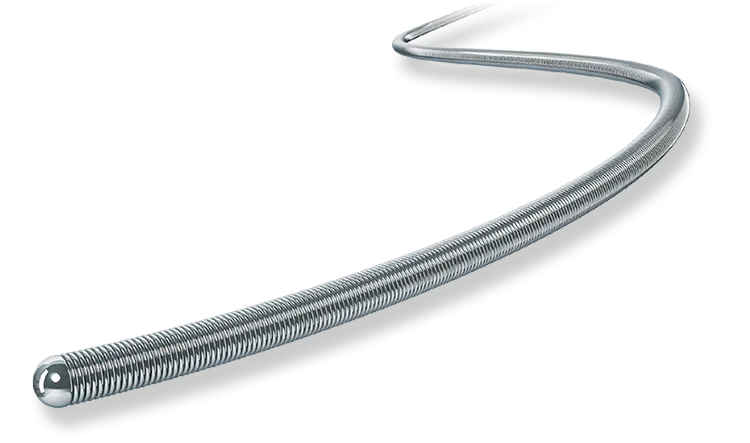
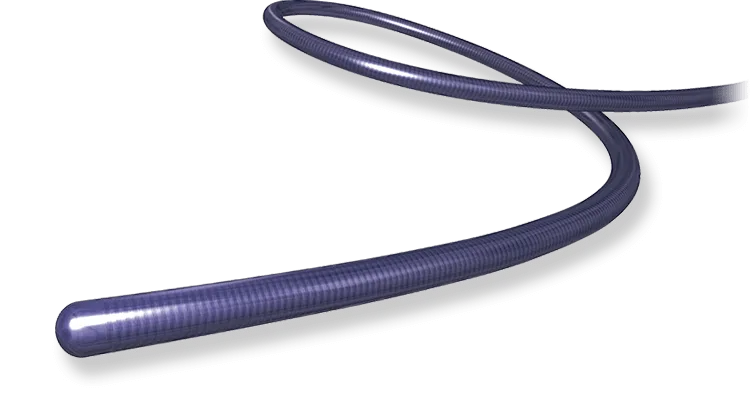
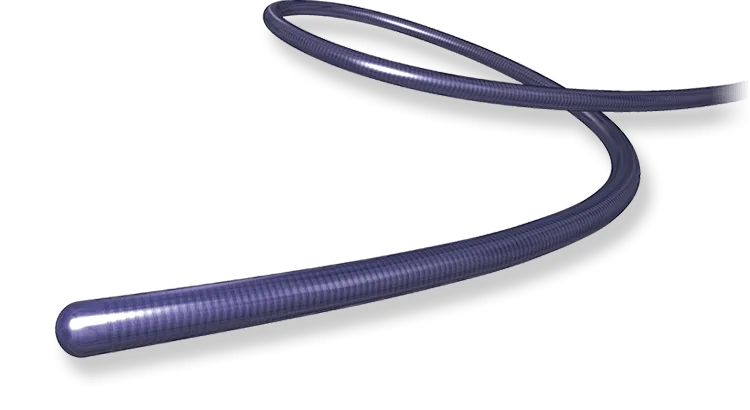
WEDGE™ Microcatheter: Distal Bulb Navigation Aid for SOFIA Advancement Through Tortuous Intracranial Anatomy
Автор: Modern Medical Solutions Editorial Team
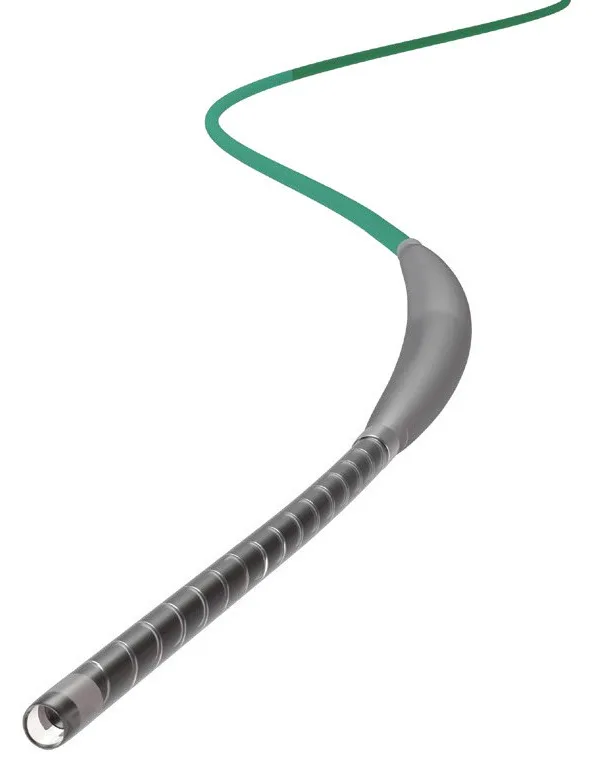
The WEDGE™ from MicroVention Terumo is a 0.021 in intracranial microcatheter with an inflatable distal bulb that anchors against the vessel wall to provide forward push support for SOFIA 6F catheter advancement past tight tortuous intracranial segments that resist conventional wire-based advancement techniques.
What Is the WEDGE™?
The WEDGE™ (catalogued as MCWED21160) is a specialised 0.021 in intracranial microcatheter from MicroVention Terumo that solves the specific problem of SOFIA 6F advancement failure at tortuous intracranial segments. A small compliant balloon at the WEDGE catheter tip is inflated in a distal vessel segment, creating a fixed anchor point. When the operator then pushes SOFIA 6F over the WEDGE body, the anchor converts the push force into forward advancement rather than catheter buckling or accordion foreshortening in the tortuous zone.
The concept borrows from the anchor wire technique in coronary intervention but applies it coaxially within the main intracranial vessel. Specifications: 0.021 in ID, 5.1F distal OD, 160 cm working length (MCWED21160). The longer working length than standard Headway microcatheters provides sufficient extracorporeal hub length for manipulation during the SOFIA advancement manoeuvre.
When to Use WEDGE™
Use WEDGE when standard SOFIA 6F advancement over a 0.014 in wire fails at a tortuous intracranial segment after the following conventional rescue attempts have been exhausted: upsizing to a stiffer guidewire, using a Headway 21 as an inner support catheter, and repositioning the guide catheter. The WEDGE provides a mechanically distinct solution — a true distal anchor rather than additional axial force — that succeeds precisely where the above techniques fail because they address the wrong mechanical problem.
Typical anatomical indications: pronounced carotid siphon angulation, fetal-type posterior communicating artery origin requiring acute-angle navigation, vertebral artery V3 segment resistance, and any configuration that creates a sharp curve the SOFIA tip cannot negotiate under wire-based push alone.
Technique
Advance the WEDGE over its shaping mandrel to a straight distal segment beyond the tortuous zone. Remove the mandrel and inflate the distal bulb to the recommended volume in the IFU — do not over-inflate. With the bulb anchored, advance SOFIA 6F over the WEDGE catheter body with steady pressure at the hub. Confirm SOFIA position fluoroscopically, then deflate the bulb and remove the WEDGE before proceeding with the planned intervention.
Always deploy the inflated bulb in a vessel segment free of significant stenosis or atherosclerosis. Confirm with road-map that the selected landing zone is normal calibre and straight before inflation.
Clinical Value
WEDGE is a low-frequency but high-value rescue device. Cases requiring WEDGE represent the most technically difficult SOFIA advancement scenarios — without it, these cases may require abandoning the intermediate catheter approach entirely, reducing the safety and efficacy of the subsequent procedure. Stocking WEDGE as a low-volume adjunct provides insurance for these cases.
Programs using SOFIA 6F as their standard intermediate catheter platform should keep at least two WEDGE units in standing inventory to ensure availability during unplanned rescue scenarios.
Ordering Through Modern Medical Solutions
Modern Medical Solutions is the authorised MicroVention Terumo distributor for Tajikistan and Afghanistan. WEDGE (MCWED21160) is available for neurointerventional programmes in Tajikistan and Afghanistan as a SOFIA family rescue adjunct.
Contact Modern Medical Solutions to include WEDGE in your SOFIA family order or to establish a dedicated access-rescue kit.