Primary healthcare network expansion across Afghan provinces
Муаллиф: Modern Medical Solutions Editorial Team
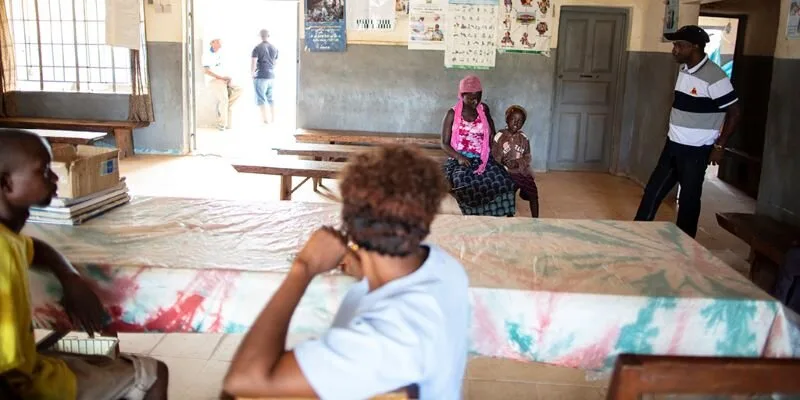
Afghanistan's Basic Package of Health Services programme is extending its reach with 35 new rural health posts and the rehabilitation of 60 existing district health centres, each equipped with essential diagnostic and treatment devices.
Primary healthcare is where most health needs are met or missed, long before a patient ever reaches a hospital ward. The expansion of Afghanistan's Basic Package of Health Services, with 35 new rural health posts and the rehabilitation of 60 existing district health centres, extends the front line of care into communities that have often had to travel far for even basic services. Each facility equipped with essential diagnostic and treatment devices represents a small but consequential increase in a population's day-to-day access to care.
The combination of new construction and rehabilitation is telling about the thinking behind the programme. Building new posts widens geographic coverage into underserved areas, while renovating existing centres protects investments already made and restores services that may have degraded over years of strain. Balancing the two reflects a mature approach to network planning rather than a preference for the headline-friendly new facilities that so often dominate announcements at the expense of quieter but equally vital repair work.
Why The Basic Package Model Matters
A defined basic package sets out which services every facility should provide, creating consistency across a dispersed and varied network. This standardisation helps administrators specify equipment, plan staffing and set clear expectations for what a community can rely on. It also simplifies procurement considerably, because a common service definition points to a common list of essential diagnostic and treatment devices that can be sourced, trained on and maintained at scale rather than negotiated afresh for every site.
The model's underlying strength is its predictability. When each health post is expected to deliver the same core services, training, supervision and resupply can all be organised around a shared template. That coherence is easy to underestimate, yet it is precisely what allows a national network to function as a genuine system rather than as a loose collection of unlike facilities each operating to its own improvised rules and stocking whatever it happened to receive.
Equipping The Rural Front Line
Essential diagnostic and treatment devices at primary level are deliberately robust and simple: equipment that can be operated by generalist staff, maintained with limited technical support, and kept running with modest consumable supplies. The emphasis is on reliability over sophistication, because a device that works consistently in a remote post delivers far more value than an advanced one that fails the moment its parts run out or its single trained operator is transferred elsewhere.
Selecting equipment suited to the setting is an operational skill in its own right. Devices must tolerate variable power, minimal servicing and heavy routine use over long periods. Matching the technology to these realities is what keeps a rural health post functioning between resupply visits rather than accumulating broken equipment that no one nearby can repair, a fate that quietly undermines many well-intentioned expansions when the wrong tools are chosen for the conditions.
Staffing And Supervision As The Binding Force
Facilities without staff are buildings, not services. Expanding a network therefore raises immediate and difficult questions about recruiting, deploying and retaining health workers in rural areas, and about the supportive supervision that keeps their skills and morale intact over time. The rehabilitation of 60 centres is only meaningful if those centres are staffed and supervised well enough to actually use their restored capacity to see and treat patients.
Sustainable networks invest heavily in the connective tissue between facilities: supervision visits, referral links and continuing education that prevent isolated posts from drifting in quality. This human infrastructure is harder to fund and harder to photograph than a new building, but it is ultimately what determines whether an expansion translates into better care or merely into more locations plotted on a coverage map that looks impressive in a report.
Referral Links That Bind The Levels Together
A primary healthcare network only works when its levels connect. Rural health posts must be able to recognise cases beyond their scope and move them reliably to district centres, which in turn must know when to refer onward. Without functioning referral links, an expanded network can create a false sense of coverage, offering entry points that lead nowhere when a patient needs more than the front line can provide on its own.
Diagnostic devices at primary level play a specific part in this system. Their value lies partly in treating what can be treated locally and partly in triage, in identifying who genuinely needs onward referral and who can safely be managed close to home. Equipment chosen with this triage role in mind, and supported by reliable import support, helps a network use its higher levels efficiently rather than overwhelming them with cases that could have been resolved earlier.
From Access To Sustained Service
The lasting test of this expansion is whether the new and rehabilitated facilities remain functional and staffed over the years, not the months, that follow. Access created and then quietly allowed to erode can leave communities worse off than before, having raised expectations that later go unmet. Durable success depends on maintenance financing, consumable supply chains and workforce retention all working together long after the opening ceremonies have ended and attention has moved elsewhere.
For organisations supporting the region's supply systems, primary-level expansion signals steady, predictable demand for reliable and appropriate devices and consumables. Partners planning such networks can draw on regional import and logistics expertise through our range of services to keep facilities supplied dependably over the long term rather than only at the point of launch.
The most encouraging feature of a basic-package expansion is that it invests where the returns on health are broadest. Primary care catches problems early, manages common conditions cheaply and reduces the burden that eventually reaches hospitals. Sustained properly, with equipment that works and staff who stay, an expanded rural network quietly shapes the health of a population far more than any single flagship facility, precisely because it meets people where they live rather than waiting for them to travel in search of care.