ASAHI Caravel®: Slender Microcatheter for Small Vessels, Septal Channels, and Distal Wiring
Муаллиф: Modern Medical Solutions Editorial Team
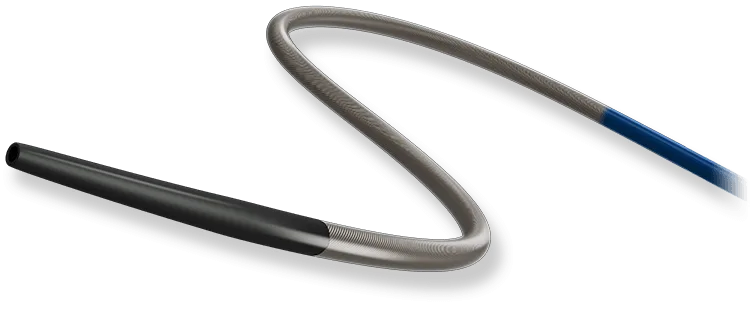
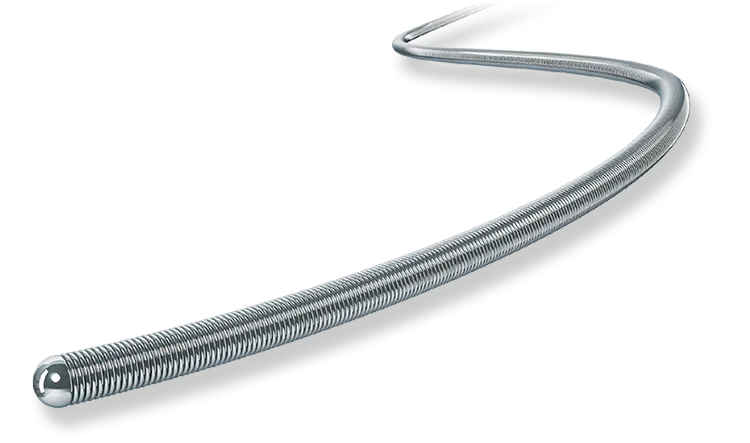
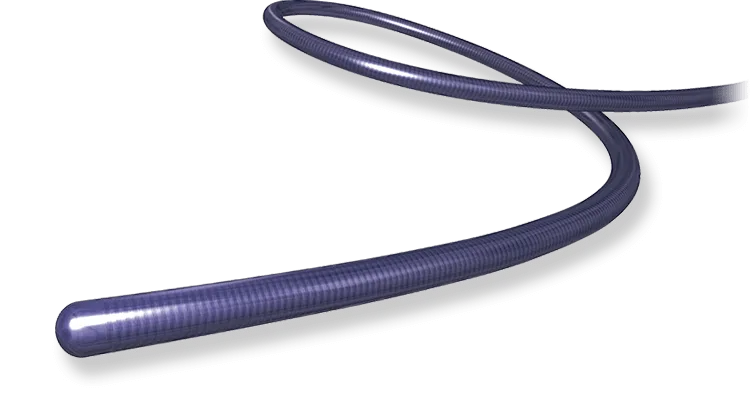
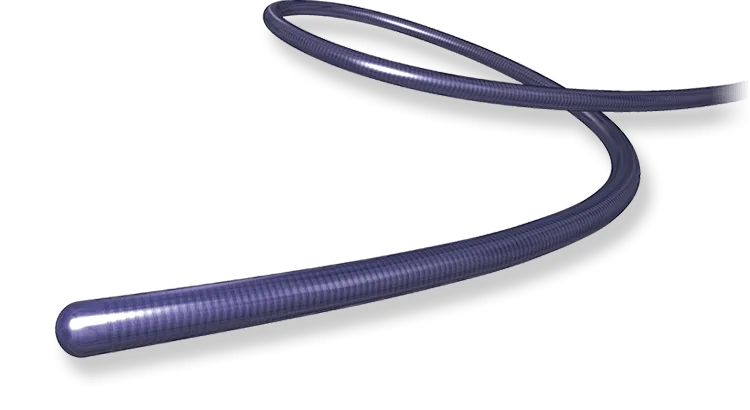
ASAHI Caravel® is a 1.4F/1.9F slender microcatheter designed for small coronary vessels, tortuous septal collateral channels, and distal wiring support where the Corsair Pro family is too large, providing smooth wire exchange and tip support in anatomy inaccessible to standard microcatheters.
What Is the ASAHI Caravel®?
The ASAHI Caravel® is a slender coronary microcatheter with a 1.4F tip and 1.9F distal shaft, making it one of the lowest-profile 0.014-inch-compatible microcatheters available for coronary use. Unlike the Corsair Pro family, Caravel does not have a rotatable braided shaft — it is not designed for active drilling. Instead, Caravel’s value lies in its ability to passively navigate extremely small or tortuous passages for wire support and exchange, accessing anatomy where larger microcatheters physically cannot fit.
The inner diameter of 0.016 inch accommodates all standard 0.014-inch coronary guidewires with adequate clearance for smooth wire exchange while maintaining the smallest possible outer profile. Caravel is available in 135 cm (CAR135) and 150 cm (CAR150) working lengths, covering both standard-length and extended-reach cases.
Caravel fills a specific niche between the Corsair Pro family (larger, rotating, more powerful) and ultra-niche tools like SASUKE (dedicated proximal cap penetration). It is the preferred passive microcatheter for small vessel PCI support and septal channel navigation when rotatable drilling is not required.
Technical Specifications
Tip diameter: 1.4F (approximately 0.47 mm). Distal shaft diameter: 1.9F (approximately 0.63 mm). Inner diameter: 0.016 inch throughout. Working lengths: 135 cm (CAR135) and 150 cm (CAR150). Compatible guidewire: 0.014 inch. Shaft construction: non-rotatable (passive, no braided drilling capability). Hydrophilic coating: distal segment (specific extent per configuration).
The 1.9F distal shaft (0.63 mm outer diameter) is notably smaller than Corsair Pro XS’s 2.1F (0.70 mm) and considerably smaller than standard Corsair Pro’s 2.6F (0.87 mm). This 0.07–0.24 mm outer diameter reduction translates into a meaningful access advantage in very small septal channels (typically 0.4–0.6 mm internal diameter) and small coronary branches (<1.5 mm reference diameter).
How Caravel Compares to Alternatives
Caravel vs. Corsair Pro XS: XS is larger (2.1F distal) but can rotate and drill. Caravel is smaller (1.9F distal) but passive. If a septal channel or small vessel is too tight for XS, Caravel is the next option. If the passage is fibrous and requires rotational drilling, XS is preferred over Caravel despite its larger size. The choice depends on whether the limiting factor is size (favour Caravel) or fibrosis requiring drilling (favour XS).
Caravel vs. Corsair Pro: For any case where Corsair Pro is appropriate, it should be preferred over Caravel due to its drilling capability. Caravel should only be selected after confirming that Corsair Pro cannot be advanced due to size constraints rather than fibrosis — i.e., the microcatheter profile is the limiting factor, not the fibrous resistance.
Caravel vs. standard diagnostic-type microcatheters (Finecross, Turnpike LP): These are competing low-profile passive microcatheters. Finecross (Terumo) has a 1.8F tip and is a direct Caravel comparator. Institutional preference and stock management guide the choice between these functionally similar tools.
Clinical Applications and Indications
Septal collateral channel navigation in retrograde CTO: when Corsair Pro XS cannot traverse the selected septal channel despite correct rotation technique, Caravel is the next escalation. Its 1.9F distal shaft can navigate channels inaccessible to XS, though without the drilling capability of the braided microcatheters.
Small-vessel PCI support: for vessels <1.5 mm reference diameter — first diagonal branches, small obtuse marginals, second-order posterolateral branches — Caravel provides wire exchange and tip support without the risk of vessel injury from a larger microcatheter shaft. The 150 cm variant (CAR150) is preferred for distal small branches requiring maximum working length.
Distal coronary wiring support in complex bifurcation PCI: Caravel placed over the side-branch wire allows precise wire tip positioning and exchange in small side branches during provisional or two-stent bifurcation strategies without risking side-branch trauma from a larger microcatheter.
Technique and Usage Tips
Because Caravel is a passive microcatheter, advancement relies entirely on wire support and forward push — no rotation technique is available. Ensure the guidewire is positioned well distal to the target site before attempting Caravel advancement; a wire that terminates at the distal cap provides insufficient rail for Caravel to track over in fibrous vessels.
In septal channels, advance Caravel with gentle steady forward pressure without rotation. If resistance is encountered, do not increase push force beyond a comfortable manual force (approximately 50–100 g estimated). If Caravel does not advance freely in the septal channel with gentle pressure, the channel may require a rotatable microcatheter (XS) or may be unsuitable for retrograde approach.
Wire exchange through Caravel: Caravel’s 0.016-inch inner diameter provides smooth wire exchange. When exchanging from a crossing wire (Fielder XT, Gaia) to a workhorse wire (SION), advance Caravel to the distal true lumen first, then exchange the wire through Caravel’s hub. Secure Caravel position carefully during exchange — its smaller size makes it slightly less stable than Corsair Pro during wire manipulation.
Ordering and Availability Through Modern Medical Solutions
Modern Medical Solutions supplies ASAHI Caravel® in both 135 cm (CAR135) and 150 cm (CAR150) configurations to catheterisation laboratories in Tajikistan and Afghanistan as the authorised Asahi Intecc distributor. Caravel is recommended as a complement to Corsair Pro and Corsair Pro XS for centres performing retrograde CTO cases and complex small-vessel PCI.
For stock planning and clinical decision support on microcatheter selection — particularly the Caravel vs. Corsair Pro XS decision in tight passages — contact Modern Medical Solutions via the website. Manufacturer specifications: medical.asahi-intecc.com.