Fielder® XT Guidewire: The Primary CTO Microchannel Probing Wire
Муаллиф: Modern Medical Solutions Editorial Team
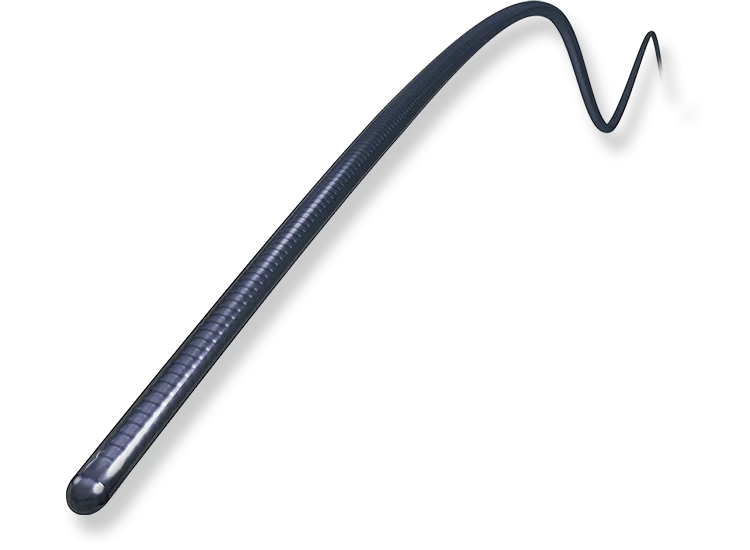
Fielder® XT is the standard first-line CTO guidewire after frontline failure, featuring a tapered 0.009/0.014-inch tip and full-length polymer + hydrophilic coating for microchannel probing — this guide explains its construction, clinical role, and how it fits into the CTO escalation algorithm.
What Is the Fielder® XT?
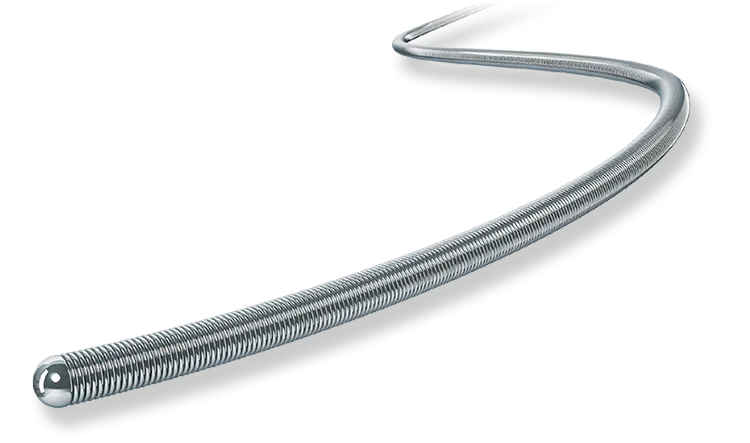
Fielder® XT is Asahi Intecc’s primary CTO (chronic total occlusion) guidewire for microchannel probing. Its defining feature is a tapered tip that transitions from 0.009 inches at the very tip to the standard 0.014-inch shaft diameter, allowing it to engage and track through microscopic channels within the occluded segment that would be inaccessible to a full-diameter 0.014-inch wire. This tip taper reduces the crossing profile by approximately 36% compared to a standard guidewire, enabling navigation through channels as small as 150–200 microns.
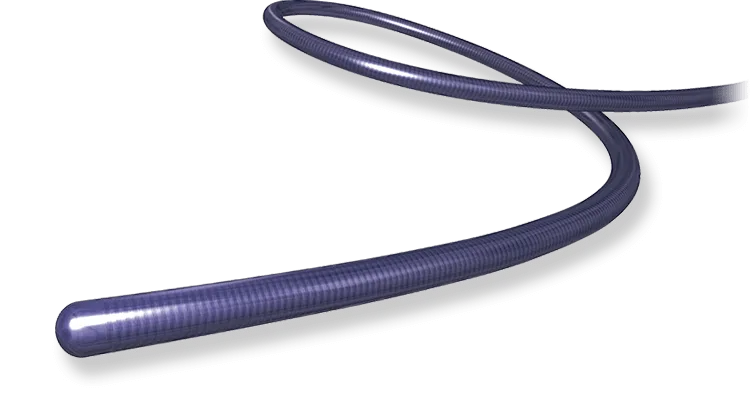
The tip load is approximately 0.8 gf, providing sufficient engagement force to probe fibrous tissue while remaining low enough to avoid vessel perforation in most cases when used under fluoroscopic guidance. Full-length polymer + hydrophilic coating reduces friction throughout the entire wire length, a critical feature in CTO cases where significant wire length may reside within a calcified or fibrotic occlusion segment and friction accumulates along the entire coil.
The 16 cm coil segment is shorter than the SION family coils, concentrating flexibility near the tip while maintaining a stiffer proximal polymer-jacketed shaft for pushability. Fielder XT is available only in straight tip configuration and in 190 cm and 300 cm lengths — no J-tip option is offered, reflecting its CTO-specific role where tip shaping is always performed manually.
Technical Specifications
Tip diameter: 0.009 inch (tapered). Shaft diameter: 0.014 inch. Tip load: approximately 0.8 gf. Coil length: 16 cm. Coating: full-length polymer + hydrophilic (the full wire length is coated, unlike the SION family which coats only the distal 28–42 cm). Available lengths: 190 cm and 300 cm. Tip shape: straight only. Catalog numbers: AGP140002 (190 cm), AGP140302 (300 cm).
The full-length coating is a key specification difference from frontline wires: it ensures that even the proximal 150+ cm of wire within the guide catheter and in the vessel proximal to the occlusion contribute minimal friction, allowing the operator to feel tactile feedback from the tip rather than shaft friction. This tactile clarity is essential for distinguishing between true-lumen tracking and subintimal advancement during CTO crossing.
How Fielder XT Compares to Alternatives
Within the Fielder family: Fielder XT-A shares the same tapered geometry but has a stiffer proximal shaft for cases where the microchannel has been identified but the wire needs more push force to advance through a longer segment. Fielder XT-R offers a softer 0.6 gf tip for subintimal re-entry back into the true lumen after deliberate subintimal passage. Fielder FC is a frontline wire (non-tapered, 0.014 in throughout) used for tortuous anatomy rather than CTO crossing.
Against non-Asahi CTO wires: Fielder XT competes with the Teleflex Pilot 50 and 150 series in the light-to-moderate CTO wire class. The tapered tip profile of Fielder XT is a technical differentiator that most competing frontline CTO wires do not offer at this tip-load level. For operators using the hybrid CTO algorithm, Fielder XT is typically the first wire after antegrade frontline failure before escalation to Gaia Second or Confianza Pro.
The key limitation of Fielder XT is its inability to penetrate truly fibrous or calcified caps: in these cases, the 0.8 gf tip load is insufficient and Gaia First or Second is the appropriate escalation. Fielder XT should be used with a microcatheter (Corsair Pro or Caravel) positioned just proximal to the cap to maximise wire support and minimise the risk of prolapse into a side branch.
Clinical Applications and Indications
Fielder XT is the standard first CTO wire in the antegrade wiring strategy after a frontline workhorse wire (SION or SION Blue) has failed to cross. It is particularly effective in CTO lesions with visible micro-channels on CTA or in lesions where the operator senses ‘give’ at the proximal cap during initial probing — suggesting a soft fibrous or organised thrombus cap rather than a calcified nodule.
In the retrograde approach, Fielder XT is commonly used for septal collateral channel navigation due to its tapered tip and full hydrophilic coating, which provide the lowest possible friction profile in tortuous septal channels. It is typically advanced through a Corsair Pro or Corsair Pro XS microcatheter into the septal channel from the retrograde guide catheter.
Ambiguous cap anatomy — where CTA quality is insufficient to distinguish between a soft cap and a calcified nodule — is also an appropriate indication for Fielder XT, as the initial probing attempt will rapidly clarify cap resistance and guide escalation to Gaia or Confianza Pro if needed.
Technique and Usage Tips
Always use a microcatheter (Corsair Pro, Corsair Pro XS, or Caravel) positioned 5–10 mm proximal to the cap before advancing Fielder XT. The microcatheter serves three functions: it provides back-support for the wire, prevents wire prolapse into side branches, and allows rapid wire exchange if escalation is needed without losing catheter position. Do not attempt Fielder XT crossing without microcatheter support.
Tip shaping: apply a gentle 30–45° bend 1–2 mm from the tip. The tapered tip is delicate — avoid sharp bends greater than 60° or repeated reshaping, as this can kink or fracture the tapered segment. Rotate with quarter-turns only, alternating clockwise and counterclockwise, while applying gentle forward pressure. Do not push against resistance beyond 2–3 rotation attempts before reassessing cap anatomy.
If Fielder XT consistently deflects laterally into side branches rather than advancing through the cap, this suggests a calcified or nodular cap that requires a higher tip-load wire (Gaia First or Second). Conversely, if the wire advances freely but exits subintimally, Fielder XT-R with its softer tip may facilitate subintimal re-entry back to the true lumen distal to the cap.
Ordering and Availability Through Modern Medical Solutions
Modern Medical Solutions is the authorised Asahi Intecc distributor for Tajikistan and Afghanistan, supplying Fielder® XT in both the 190 cm (AGP140002) and 300 cm (AGP140302) configurations. For centres establishing CTO programmes, we recommend stocking both lengths: 190 cm for standard antegrade cases and 300 cm for complex retrograde cases requiring exchange-length wire management.
Clinical support including CTO algorithm education and on-site proctoring is available through Modern Medical Solutions. Product enquiries and ordering information can be accessed via the contact page on the Modern Medical Solutions website. Reference specifications: medical.asahi-intecc.com.