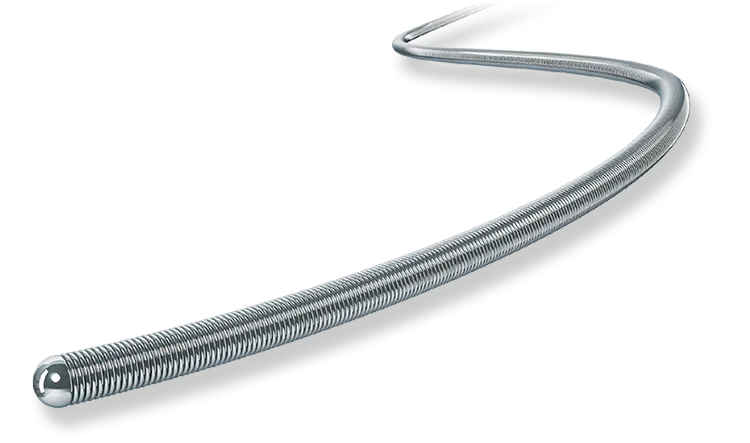
WEB™ Detachment Controller: Electrolytic Release System for Controlled WEB Device Detachment
Муаллиф: Modern Medical Solutions Editorial Team
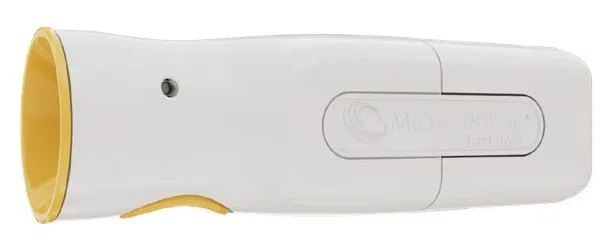
The WEB™ Detachment Controller from MicroVention Terumo is a single-use electrolytic detachment controller that provides controlled, confirmed electrolytic release of WEB SL and WEB SLS devices after final positioning, with impedance-change feedback that confirms detachment and eliminates ambiguity about whether the device is detached.
What Is the WEB™ Detachment Controller?
The WEB™ Detachment Controller is the electrolytic detachment system used to permanently release a WEB SL or WEB SLS device from its delivery wire after the operator has confirmed optimal intrasaccular position using the V-Grip. The Controller applies a small electrolytic current to the platinum detachment zone on the WEB delivery wire, electrolytically severing the connection between wire and device over approximately 30–60 seconds, leaving the WEB device permanently implanted in the aneurysm sac.
The electrolytic detachment mechanism is the same principle used for standard detachable coil release — a safe, well-established, and predictable release method. What distinguishes the WEB Detachment Controller from a standard coil detachment controller is the device-specific impedance monitoring and detachment confirmation protocol, which are tailored to the WEB’s larger metallic surface area compared to a single coil loop.
Detachment Confirmation
After the electrolytic current is applied, the Detachment Controller monitors the electrical impedance of the circuit. When the WEB delivery wire detaches from the device, the impedance changes measurably — this change is displayed to the operator as confirmation that detachment has occurred. This impedance feedback is the critical safety feature: it eliminates reliance on subjective fluoroscopic assessment of whether the device has separated from the wire, providing objective electrical confirmation.
The detachment confirmation protocol prevents premature withdrawal of the delivery wire before the detachment is complete, which could inadvertently displace the WEB from its optimal intrasaccular position. The Controller is held in the active mode until the confirmed detachment signal is received, after which the delivery system can be withdrawn through the VIA microcatheter.
Procedure Sequence
After final WEB positioning with the V-Grip, disconnect the V-Grip from the delivery wire hub and connect the WEB Detachment Controller. Apply the electrolytic current according to the Controller operating instructions. Maintain the VIA microcatheter in its current position throughout the detachment sequence — any microcatheter movement during detachment risks displacing the WEB from its neck-coverage position.
After confirmed detachment, slowly withdraw the delivery wire through the VIA microcatheter, then withdraw the VIA microcatheter from the aneurysm sac. Perform final angiography immediately after VIA removal to confirm WEB position, neck coverage, and patency of the efferent branches.
Technique Tips
Ensure that the WEB is in confirmed optimal position before initiating detachment — the device cannot be repositioned after detachment. If the fluoroscopic appearance suggests suboptimal neck coverage or device asymmetry after the final road-map assessment, resheath with the V-Grip and reposition before connecting the Detachment Controller.
Keep the detachment wire and Controller connections secure throughout the detachment cycle — inadvertent disconnection mid-cycle requires reconnection and re-initiation of the sequence, adding procedure time.
Ordering Through Modern Medical Solutions
Modern Medical Solutions is the authorised MicroVention Terumo distributor for Tajikistan and Afghanistan. The WEB Detachment Controller is supplied as a standard accessory with WEB device kits and is also available separately for neurointerventional programmes in Tajikistan and Afghanistan.
Contact Modern Medical Solutions to order the WEB Detachment Controller alongside WEB SL, WEB SLS, VIA microcatheters, and V-Grip as a complete WEB treatment system.