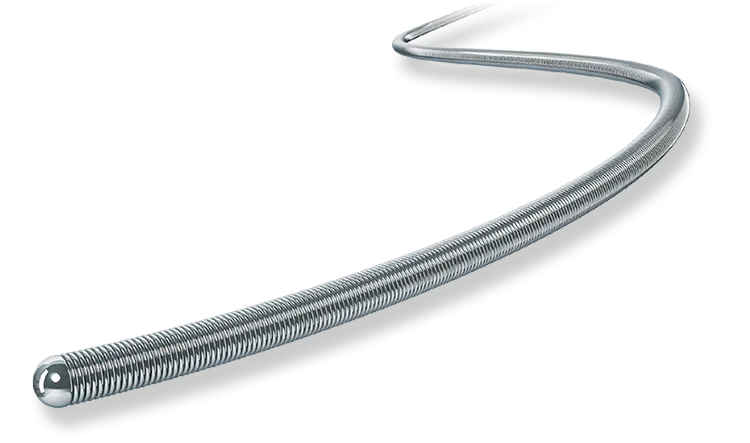
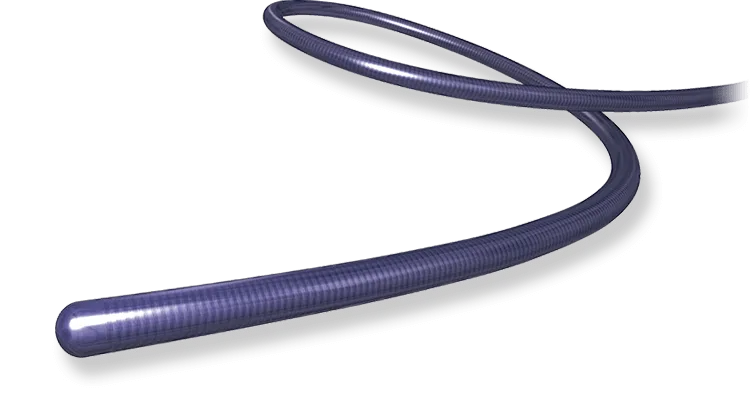
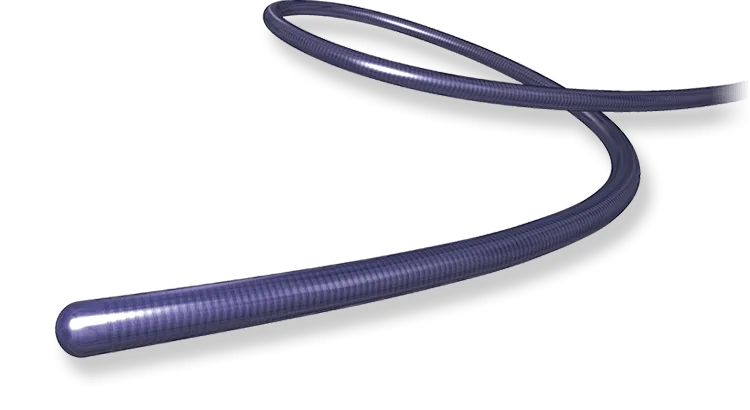
Fielder® XT-A and XT-R Guidewires: Optimised CTO Advancement and Re-entry
By Modern Medical Solutions Editorial Team
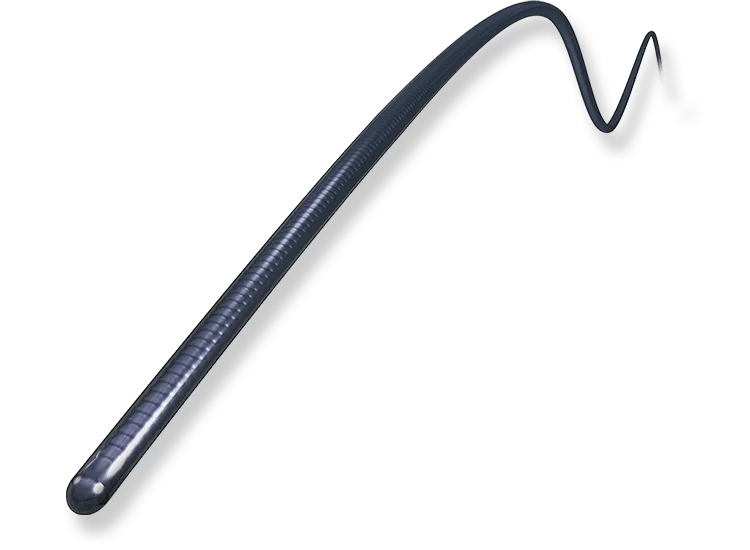
Fielder® XT-A and XT-R are targeted CTO guidewires — XT-A delivers enhanced shaft pushability once a microchannel is identified, while XT-R’s softer 0.6 gf tip facilitates subintimal re-entry into the true lumen — both sharing the tapered 0.010/0.014-inch tip profile of the Fielder family.
What Are Fielder® XT-A and XT-R?
Fielder® XT-A and XT-R are two specialised variants within the Fielder CTO guidewire family from Asahi Intecc, each addressing a specific challenge in the CTO crossing algorithm. Both share a tapered tip geometry (0.010 inch tip / 0.014 inch shaft) and 17 cm polymer + hydrophilic coating from the tip, but differ in shaft stiffness and tip load to serve complementary roles within the same procedure.
XT-A (‘A’ for Advance) features a stiffer proximal shaft compared to standard Fielder XT, providing greater pushability once the operator has identified a microchannel at the proximal cap. When Fielder XT locates the channel but lacks the push force to advance through a longer occlusion segment, XT-A is the next escalation step within the Fielder family before moving to the Gaia series. Its tip load is approximately 1.0 gf.
XT-R (‘R’ for Re-entry) takes the opposite approach: a softer 0.6 gf tip is designed to deflect rather than penetrate when the wire encounters the adventitia or fibrotic subintimal space, facilitating re-entry into the true lumen distal to the occluded segment after deliberate or inadvertent subintimal passage. This makes XT-R an essential companion to any antegrade subintimal technique (STAR, mini-STAR, LAST) and to the retrograde approach.
Technical Specifications
Both XT-A and XT-R: Tip diameter 0.010 inch (tapered), shaft diameter 0.014 inch. Coating: 17 cm polymer + hydrophilic from the tip (distal zone only, unlike the full-length coating of standard Fielder XT). Tip shape: straight only. Available lengths: 190 cm and 300 cm.
XT-A specifics: tip load approximately 1.0 gf; shaft stiffness increased proximal to the coil for superior pushability. Catalog: APW14R010S (190 cm), APW14R310S (300 cm). XT-R specifics: tip load approximately 0.6 gf; softer tip for deflection-based re-entry. Catalog: APW14R005S (190 cm), APW14R305S (300 cm). Note that the 17 cm coating zone (vs. 16 cm in standard XT) is a minor but deliberate engineering difference reflecting the distinct tip-to-shaft transition in these variants.
How XT-A and XT-R Compare to Alternatives
XT-A vs. Gaia First (1.7 gf): XT-A is the intermediate step between Fielder XT (0.8 gf) and Gaia First (1.7 gf) in tip load, but more importantly its shaft stiffness profile differs from Gaia’s rotating core construction. XT-A is appropriate when the issue is shaft push force rather than tip penetration force — it pushes the already-engaged tip forward through a known channel, while Gaia First drills through unknown resistance with superior torque transmission.
XT-R vs. other re-entry tools: The primary non-wire re-entry tool is the Bridgepoint Medical CrossBoss / Stingray system (Boston Scientific). XT-R represents the guidewire-only re-entry approach, which avoids the additional cost and complexity of the CrossBoss/Stingray system and is preferred by experienced CTO operators in straightforward subintimal cases. However, for long subintimal passages or distal vessel re-entry in critical vessels, the dedicated Stingray balloon + wire system provides more controlled and predictable re-entry.
For centres building a CTO inventory, XT-A and XT-R are typically stocked alongside standard Fielder XT to provide complete Fielder family coverage. The cost difference between the three Fielder variants is modest relative to their combined utility in completing complex CTO cases without escalating to more expensive dedicated re-entry systems.
Clinical Applications and Indications
XT-A indication: The operator has advanced standard Fielder XT into the proximal cap and can feel micro-channel tracking (wire advances in small increments with rotation, cap is soft), but forward progress stalls after 5–10 mm of occlusion length due to shaft buckling rather than cap resistance. Switching to XT-A provides the additional shaft support needed to transmit push force to the tip over the remaining occlusion length.
XT-R indication: After deliberate antegrade subintimal passage (LAST technique) or inadvertent subintimal entry during cap crossing, the wire has advanced to within 10–20 mm of the distal true lumen on the distal cap side. XT-R’s soft tip is deflected by the subintimal space boundary and tends to point toward the true lumen at the distal fibrous cap, facilitating re-entry when manipulated with small rotations and gentle advancement.
In the retrograde approach, XT-R is used at the distal cap after retrograde wire entry into the subintimal space, to redirect the wire antegrade into the true lumen for reverse CART or CART techniques. Its soft tip reduces the risk of retrograde vessel injury during the re-entry manoeuvre.
Technique and Usage Tips
For XT-A, always advance with microcatheter support (Corsair Pro positioned at the cap). Once the microchannel is engaged, advance the microcatheter forward over XT-A incrementally as the wire progresses — do not allow the microcatheter to lag more than 10 mm behind the wire tip, as this increases wire buckling risk in a long occlusion segment. Use continuous fluoroscopy during advancement to confirm true-lumen tracking.
For XT-R in re-entry technique: position the microcatheter at the distal fibrous cap from the subintimal space side. Advance XT-R 1–2 mm beyond the microcatheter tip, then rotate gently (quarter turns) while applying minimal forward pressure. The tip will seek the path of least resistance — in an organised subintimal space this typically means the adventitial boundary deflects the tip toward the true lumen. Confirm re-entry with contrast injection through the microcatheter once the wire has advanced past the distal cap.
Do not use XT-R as a primary crossing wire or attempt to use it to penetrate a fibrous cap: its 0.6 gf tip will consistently deflect rather than penetrate, wasting procedure time. Reserve XT-R exclusively for the re-entry phase.
Ordering and Availability Through Modern Medical Solutions
Modern Medical Solutions supplies Fielder® XT-A (APW14R010S, APW14R310S) and Fielder® XT-R (APW14R005S, APW14R305S) as part of its Asahi Intecc CTO portfolio for Tajikistan and Afghanistan. These wires are recommended as part of a comprehensive CTO wire set that includes Fielder XT, Gaia series, and Confianza Pro to support the full CTO escalation algorithm.
For CTO programme development, Modern Medical Solutions can provide wire algorithm training sessions and case planning support. Contact the team via the Modern Medical Solutions website for stock availability and ordering. Reference: medical.asahi-intecc.com.