ASAHI Gaia Next®: Second-Generation Rotating-Core CTO Wires with Upward-Calibrated Tip Loads
By Modern Medical Solutions Editorial Team
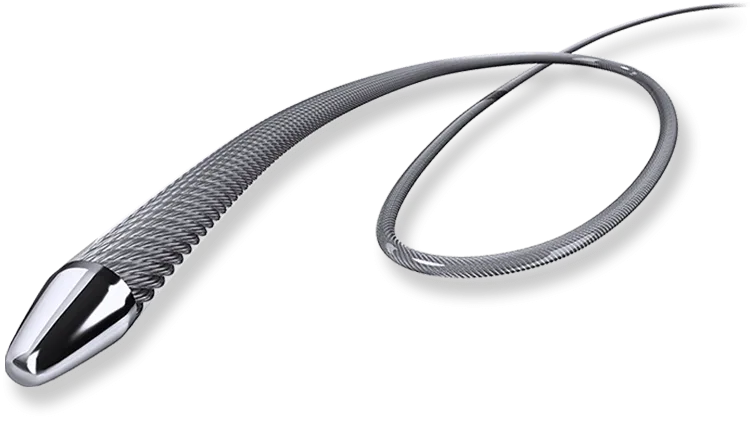
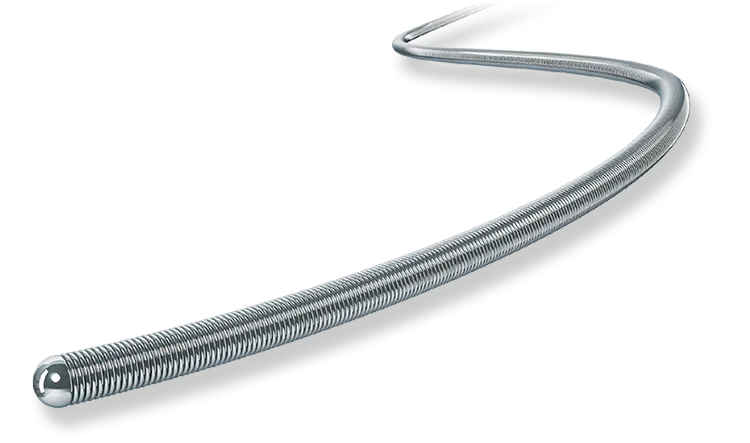
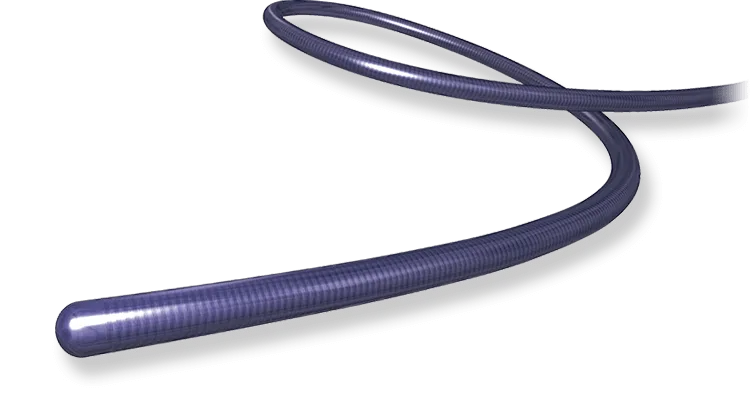
The ASAHI Gaia Next® — Next 1 (2 gf), Next 2 (4 gf), Next 3 (6 gf) — builds on the rotating-core platform of the original Gaia with recalibrated tip loads and an important bridge between Gaia Third and Confianza Pro for intermediate-hardness CTO caps.
What Is the ASAHI Gaia Next® Series?
The ASAHI Gaia Next® series is the second generation of Asahi Intecc’s rotating-core CTO guidewire platform, retaining the fundamental rotating composite core design of the original Gaia series while recalibrating tip loads upward across all three grades: Next 1 at 2 gf (vs. Gaia First’s 1.7 gf), Next 2 at 4 gf (vs. Second’s 3.5 gf), and Next 3 at 6 gf — a meaningful new entry point that bridges the gap between Gaia Third (4.5 gf) and Confianza Pro (9 gf).
The Gaia Next series is available only in 190 cm working length and pre-shape tip only — no 300 cm or straight variants. This reflects a design philosophy favouring the pre-shape advantage of the rotating core for CTO crossing rather than operator-customised tip geometry. Catalog numbers: AH14R019P (Next 1), AH14R020P (Next 2), AH14R021P (Next 3).
For centres that have adopted the original Gaia series, Gaia Next represents a compatible upgrade: the handling characteristics and technique requirements are identical to the first-generation Gaia, making the transition straightforward without additional training. The primary clinical motivation for upgrading is the new 6 gf Next 3 grade and the overall upward calibration of tip loads.
Technical Specifications
All Gaia Next wires: rotating composite core construction (same platform as original Gaia). Tip diameter: tapered (0.010–0.012 inch). Shaft diameter: 0.014 inch. Hydrophilic coating: 40 cm from tip (same as original Gaia). Tip shape: pre-shape only. Working length: 190 cm only (no 300 cm variant). Tip loads: Next 1 — 2 gf; Next 2 — 4 gf; Next 3 — 6 gf.
Catalog numbers: AH14R019P (Gaia Next 1, 190 cm pre-shape), AH14R020P (Gaia Next 2, 190 cm pre-shape), AH14R021P (Gaia Next 3, 190 cm pre-shape). The absence of 300 cm variants means that retrograde CTO cases requiring exchange-length wires must use original Gaia 300 cm variants (AHW14R007P/308P/311P) or switch to Confianza Pro for the retrograde crossing phase.
How Gaia Next Compares to Original Gaia
The upward calibration is the primary differentiator. In practice, Gaia Next 1 (2 gf) provides marginally more penetrating force than Gaia First (1.7 gf), which may be clinically irrelevant for many operators. The more significant upgrade is Gaia Next 2 (4 gf vs. 3.5 gf) and especially Next 3 (6 gf vs. Gaia Third’s 4.5 gf). The 6 gf Next 3 fills the largest gap in the original Gaia escalation ladder, where operators faced a jump from 4.5 gf directly to Confianza Pro’s 9 gf.
Gaia Next 3 vs. the Conquest Pro/Confianza Pro family (approximately 8 gf): These two wires together now provide fine-grained tip-load escalation in the 4.5–9 gf range — a zone that previously required an abrupt jump to maximum-force penetration wires. For caps that are visibly calcified but not the most severe nodular calcium encountered, Next 3 or the Conquest Pro/Confianza Pro family may achieve crossing with lower perforation risk than full-strength Confianza Pro 9 gf.
The 190 cm-only limitation is the primary practical disadvantage vs. original Gaia. For complex CTO cases — particularly retrograde cases or very long tortuous coronary arteries — operators may need to use original Gaia 300 cm wires at some steps of the algorithm, making Gaia Next a supplement to rather than a complete replacement for the original Gaia 300 cm inventory.
Clinical Applications and Indications
Gaia Next 1 and Next 2 are appropriate for the same antegrade wiring indications as original Gaia First and Second: fibrous to moderately calcified caps where Fielder XT-A has failed. Many operators who have upgraded to Gaia Next simply replace their First/Second stock with Next 1/Next 2 for standard cases, accepting the marginal upward calibration as an improvement.
Gaia Next 3 is the most clinically distinctive addition: it is indicated when Gaia Second or original Gaia Third has failed in a cap that appears intermediate-calcified on CTA (Hounsfield units 600–900) and where the operator prefers to attempt another rotating-core wire escalation before committing to the Confianza Pro needle-tip approach. For many operators, Gaia Next 3 crosses caps that previously required Confianza Pro, reducing procedural risk.
Centres with limited CTO wire inventories can streamline their stock by replacing Gaia First through Third with Gaia Next 1 through Next 3 for 190 cm antegrade cases, and retaining Gaia original 300 cm variants for retrograde cases only. This reduces SKU count while improving tip-load coverage.
Technique and Usage Tips
Technique with Gaia Next is identical to original Gaia: pre-shape tip only, rotating composite core, microcatheter support (Corsair Pro or Caravel) essential. No manual reshaping. Quarter-turn rotations with gentle forward pressure, advancing microcatheter incrementally behind the wire. Confirm true-lumen position with contrast injection before predilatation.
With Gaia Next 3 at 6 gf, the operator should be particularly attentive to the direction of wire advancement relative to the vessel wall. At 6 gf, inadvertent subintimal entry can occur more rapidly than with lower tip-load wires. Monitor wire tip position fluoroscopically on every rotation cycle and withdraw if the wire appears to be moving laterally or the resistance pattern changes from ‘controlled grating’ (fibrous cap penetration) to ‘sudden give’ (subintimal entry).
If Gaia Next 3 fails to cross after 5–6 careful rotation cycles, the next appropriate step is the Conquest Pro/Confianza Pro family or full-strength Confianza Pro 9 gf — always with Corsair Pro positioned at the cap, and with the operator prepared for the subintimal dissection-re-entry algorithm if penetration is not achieved within a few additional attempts.
Ordering and Availability Through Modern Medical Solutions
Modern Medical Solutions supplies the Gaia Next® series (AH14R019P, AH14R020P, AH14R021P) to CTO programmes in Tajikistan and Afghanistan as part of its Asahi Intecc coronary guidewire portfolio. As these are 190 cm-only wires, complementary 300 cm original Gaia variants are available for retrograde case support.
CTO algorithm consultation — including guidance on when to use Gaia Next vs. original Gaia vs. Confianza Pro at each escalation step — is available through Modern Medical Solutions clinical specialists. Contact the team via the website for ordering and clinical support.