Mazar-i-Sharif hospitals receive modern monitoring and surgical devices
Автор: Modern Medical Solutions Editorial Team
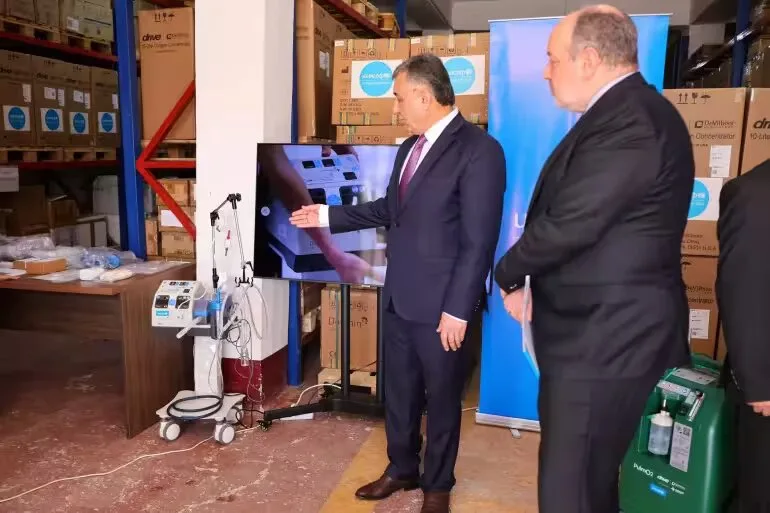
Balkh Regional Hospital and two affiliated clinics received a shipment of patient monitors, anaesthetic workstations and laparoscopic instruments through a bilateral health cooperation programme, boosting surgical throughput in northern Afghanistan.
Equipping A Regional Surgical Hub
Regional referral hospitals occupy a demanding position within any health system, absorbing referrals beyond the reach of district facilities while setting the clinical standard for the surrounding area. A shipment reaching Balkh Regional Hospital and two affiliated clinics addresses a familiar constraint in northern Afghanistan: the gap between clinical ambition and the equipment available at the bedside and in theatre. Patient monitors, anaesthetic workstations and laparoscopic instruments together represent a coordinated attempt to raise surgical throughput without overextending the existing workforce.
The value of such a package lies in its combination. Monitoring, anaesthesia and minimally invasive instrumentation are interdependent; each becomes more useful when the others are present and integrated into a common workflow. Delivering them together, rather than piecemeal, reflects an operational logic that experienced procurement teams recognise, because half-equipped theatres tend to sit idle while administrators wait for a missing component to arrive through a separate and often slower funding cycle.
How Bilateral Cooperation Programmes Function
Bilateral health cooperation programmes typically pair a donor government or agency with a recipient ministry, moving goods through defined channels that cover customs, distribution and installation. These arrangements usually specify which facilities receive equipment and often attach conditions on maintenance and reporting. The predictability they offer is significant, since it allows recipient hospitals to plan clinical services around confirmed arrivals rather than uncertain pledges that may or may not materialise.
For distributors and importers operating in the region, programmes of this kind underline how much regulatory and logistical groundwork precedes any delivery. Documentation, lot traceability and clearance procedures determine whether a shipment reaches a ward on schedule or stalls indefinitely at a border. Modern Medical Solutions supports partners in Tajikistan and Afghanistan with medical device import support, and the same disciplines apply whenever equipment of this kind moves across the region toward the facilities that need it.
Sustaining Devices Beyond Delivery Day
The hardest phase of any equipment initiative begins after the boxes are opened. Anaesthetic workstations and patient monitors require calibration, consumables, and a supply of spare parts that must be secured in advance rather than sourced reactively during a crisis. Laparoscopic instruments depend on reprocessing capacity and trained sterilisation staff. Where these enabling systems are weak, sophisticated devices can fall out of service within a year, which is why sustainability planning matters as much as the initial handover ceremony.
A durable model treats maintenance budgets, biomedical technician training and consumable pipelines as core line items rather than afterthoughts. Facilities that log device uptime and schedule preventive servicing tend to preserve their investment far longer than those relying on ad hoc repairs after a failure. This operational discipline is unglamorous but decisive; it separates a shipment that transforms a surgical department from one that briefly impresses and then gradually degrades into a store of unusable hardware.
Documentation received alongside the equipment matters here too. Correct registration records, warranty terms and clear maintenance schedules determine how easily a facility can source parts later. Where importers handle these details carefully, as reliable device registration support requires, hospitals inherit a manageable asset rather than an orphaned one whose paperwork is incomplete and whose spare parts prove impossible to trace when the first fault eventually appears on a busy operating day.
Building Theatre Teams To Match The Kit
New instrumentation only lifts throughput when clinical teams can use it confidently and safely. Laparoscopic surgery, in particular, demands a learning curve, structured mentorship and repeated case exposure before efficiency gains materialise. Anaesthesia teams must become fluent with unfamiliar workstations, and nursing staff need to integrate new monitoring alarms into established theatre routines. Training therefore functions as part of the equipment package, not a separate courtesy that can be deferred until convenient.
Where phased mentorship and proctoring accompany a delivery, adoption tends to be smoother and complication rates lower during the transition period. Facilities that pair equipment with protected teaching time convert hardware into capability more reliably than those expecting immediate independent use. The investment in people is what allows a theatre to move from cautious first procedures toward the sustained, higher-volume operating that the shipment is intended to enable in the first place.
Throughput Gains For Northern Afghanistan
Raising surgical throughput at a regional hospital has effects that ripple outward across the wider system. When Balkh Regional Hospital can perform more procedures locally, referral pressure on distant tertiary centres eases and patients travel shorter, safer distances for care. The two affiliated clinics extend that reach further, creating a small network capable of triaging and managing cases at appropriate levels. Coordinated networks of this type make better use of scarce specialists than isolated single-site upgrades.
The measure of success will be whether the additional capacity is matched by consumables, staffing rotas and referral pathways that keep theatres productive month after month. Equipment expands the ceiling of what is clinically possible; the surrounding operational system determines how close a hospital actually operates to that ceiling. A well-equipped theatre that runs at a fraction of its potential still represents care denied to patients who could have been treated.
There is also a workforce-retention dimension that is easy to miss. Clinicians tend to stay where they can practise to the level of their training, so a properly equipped and maintained surgical department can help a regional hospital attract and keep the very staff it needs to run at capacity. In this way, an equipment upgrade and a workforce strategy quietly reinforce one another over the years that follow the initial delivery.
The Distributor Perspective On Regional Supply
Sustained supply chains, rather than one-off shipments, are what keep hospitals running over the long term. Reliable access to consumables, replacement parts and correctly certified devices depends on established regional distribution relationships that outlast any single donation. A registered distributor understands the paperwork, warehousing and handling considerations that determine whether resupply is smooth or interrupted, and treats every delivery as one node in a continuing service rather than a closed transaction that ends once goods clear customs.
This continuity is particularly valuable for a facility serving both northern Afghanistan and, indirectly, the wider region. When resupply is predictable, administrators can commit confidently to expanding services, knowing that a shortage of a routine consumable will not silently halt a newly capable theatre. The relationship between a hospital and its distributor is, at its best, a shared interest in keeping equipment in service rather than a series of disconnected purchase orders.
Часто задаваемые вопросы
What ongoing support do anaesthetic workstations and patient monitors typically require?
These devices need routine calibration, preventive maintenance and a steady supply of consumables such as sensors, sampling lines and filters. Manufacturers usually specify servicing intervals, and facilities benefit from trained biomedical technicians who can perform first-line checks. Planning spare-part availability in advance prevents avoidable downtime, since a single missing component can take a monitor or workstation out of clinical use for weeks at a time.
How can a hospital prepare staff before laparoscopic instruments arrive?
Preparation usually includes identifying a lead surgeon and theatre team, arranging structured training or proctoring, and confirming that sterilisation and reprocessing capacity can handle the new instruments. Establishing case-selection criteria and clear referral pathways helps teams build experience safely. Early engagement with the supplier on servicing and consumables also avoids the common situation where equipment is delivered before staff are ready to use it well.
Why deliver monitoring, anaesthesia and surgical instruments together?
These categories are clinically interdependent: safe surgery requires anaesthesia, and both require monitoring. Delivering them as a coordinated package means a theatre can become fully functional at once rather than waiting for a missing element through a separate funding cycle. It also simplifies training, since teams can learn integrated workflows instead of adapting repeatedly as individual pieces of equipment arrive at different times.