Tornus®: Stainless-Steel Coil Microcatheter for Mechanical Fibrocalcific CTO Drilling
Автор: Modern Medical Solutions Editorial Team
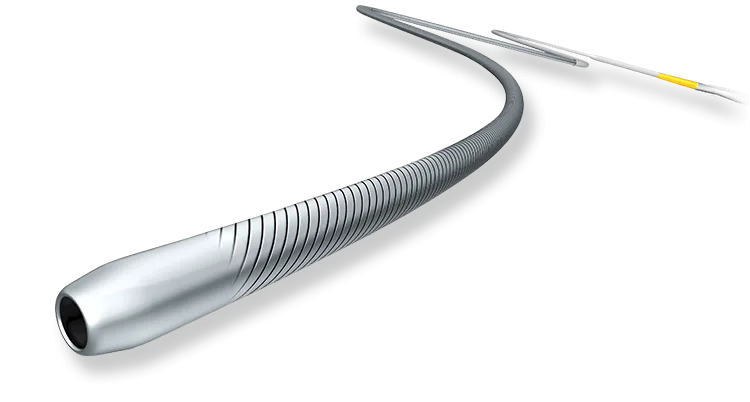
Tornus® is a stainless-steel coil microcatheter that mechanically drills through fibrocalcific CTO segments when balloons cannot advance after wire crossing, using clockwise rotation to advance and counterclockwise to retract in a unique corkscrew-like motion through calcified occlusion tissue.
What Is the ASAHI Tornus®?
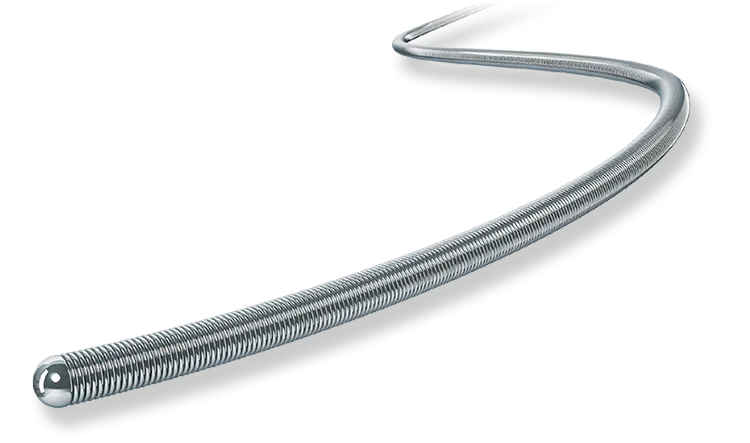
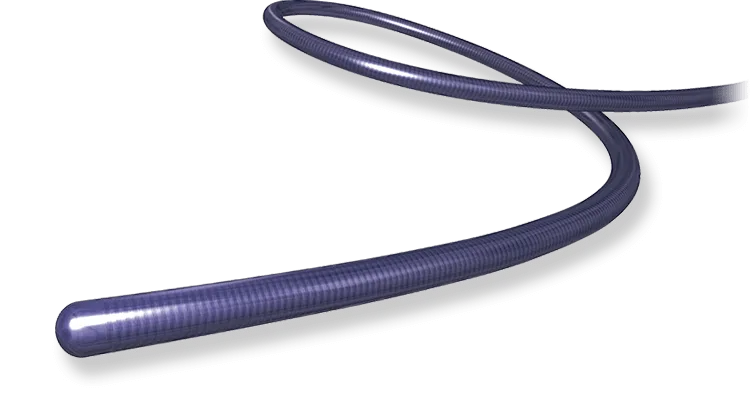
The ASAHI Tornus® is a unique coronary microcatheter constructed from a stainless-steel coil rather than a braided polymer shaft. This coil construction gives the Tornus a screwing or corkscrew-like interaction with the tissue it is advanced through: clockwise rotation causes the coil to advance (screw forward into the tissue), while counterclockwise rotation retracts it. This is the opposite of conventional devices and requires a specific technique understanding before use.
The Tornus’s primary clinical role is to advance through a heavily fibrocalcific CTO occlusion body after the guidewire has already crossed but standard balloons (including 1.2 mm non-compliant balloons) cannot advance due to calcification. At this point, the Tornus is deployed over the wire and rotated to drill a microchannel through the calcium, creating a larger passage for subsequent balloon advancement.
Two sizes are available: Tornus 2.1F (AT24135) and Tornus 2.6F (AT35135), both 135 cm working length. The 2.1F variant is used in most cases as the initial mechanical crossing attempt; the 2.6F is used for more aggressive tissue modification when 2.1F is insufficient or when the operator specifically requires the larger tip’s drilling force.
Technical Specifications
Tornus 2.1F: outer diameter 2.1F (0.70 mm), working length 135 cm. Catalog: AT24135. Tornus 2.6F: outer diameter 2.6F (0.87 mm), working length 135 cm. Catalog: AT35135. Both variants: stainless-steel coil shaft construction; inner diameter accommodates 0.014-inch guidewire; clockwise advance, counterclockwise retract convention.
The coil construction produces a wire-like flexibility in the shaft that allows Tornus to navigate tortuous proximal vessels while maintaining the mechanical engagement with calcified tissue needed for drilling. The stainless-steel material is more rigid than polymer-braided shafts at equivalent outer diameters, contributing to the drilling force transmitted to the tip during rotation.
How Tornus Compares to Alternatives
Tornus vs. Corsair Pro rotation technique: Corsair Pro’s braided shaft rotation drills through fibrous tissue but has limited capability in densely calcified CTO bodies. Tornus’s stainless-steel coil is specifically designed for calcified tissue modification — it is more effective than Corsair Pro rotation for the specific problem of post-wire-crossing balloon failure due to calcium. The two tools are complementary rather than competing.
Tornus vs. rotational atherectomy (Rotablator): Rotablator provides diamond-burr mechanical calcium ablation over a specific 0.009-inch Rota wire and is more powerful than Tornus for very dense calcium. However, Rotablator requires the Rota wire to be in position, a specific burr size selection, and a higher operator skill level for complication management. Tornus is a simpler intermediate step before committing to Rotablator in fibrocalcific post-wire balloon failure.
Tornus vs. intravascular lithotripsy (Shockwave): Shockwave delivers acoustic pulse energy to fracture calcium without mechanical abrasion. Shockwave cannot be used until a balloon can first be advanced to the calcium site — if balloon advancement itself has failed, Tornus (or Rotablator) must first create the passage before Shockwave can be deployed.
Clinical Applications and Indications
Post-wire-crossing balloon failure due to fibrocalcific occlusion body is the primary and specific Tornus indication. The wire has crossed (confirmed by contrast injection through a microcatheter in the distal true lumen), but the smallest available balloon (1.2 mm NC) cannot be advanced past a calcified segment within the occlusion. Tornus is deployed over the wire at this calcified segment.
In ‘undilatable’ calcified lesion scenarios within CTO cases, after Tornus has created a mechanical channel through the calcium, a 1.2 mm balloon can typically be advanced and the subsequent predilatation and stenting can proceed. Tornus itself does not remove calcium — it creates a conduit through or around the calcified nodule.
Tornus is occasionally used in severely calcified non-CTO lesions where a wire has crossed but balloon advancement fails before any stent can be delivered. In this non-CTO setting, Tornus provides a mechanical crossing assist before stent delivery, avoiding the need for immediate rotational atherectomy in suitable cases.
Technique and Usage Tips
Clockwise to advance, counterclockwise to retract — memorise this fundamental Tornus convention before the procedure. Applying counterclockwise rotation while attempting to advance will retract the Tornus and may cause guide catheter disengagement or wire displacement. Consider annotating the hub with a directional reminder marker for unfamiliar operators.
Hold the guidewire firmly (or clamp it with a haemostat at the Y-connector) while rotating Tornus, as the corkscrew motion will attempt to rotate the wire with the microcatheter. If the wire rotates with Tornus, the tip geometry changes and the drilling effect is reduced. Fixed wire position is essential for effective Tornus rotation.
Limit total rotations to 15–20 clockwise turns before assessing advancement. If no advancement occurs after 20 turns, withdraw Tornus by counterclockwise rotation, reassess wire position, and consider Tornus 2.6F if 2.1F was used, or escalate to Rotablator if Tornus completely fails. Do not persist with excessive rotation as this can cause coil deformation or entanglement with the guidewire.
Ordering and Availability Through Modern Medical Solutions
Modern Medical Solutions supplies ASAHI Tornus® 2.1F (AT24135) and 2.6F (AT35135) to CTO programmes in Tajikistan and Afghanistan as the authorised Asahi Intecc distributor. Both variants are recommended for centres performing CTO PCI with fibrocalcific lesion profiles, where post-wire balloon failure is a predictable complication requiring a specific mechanical solution.
Tornus technique training — including the clockwise/counterclockwise convention, wire fixation technique, and complication avoidance — is available through Modern Medical Solutions clinical support. Contact the team via the website for ordering and training scheduling.