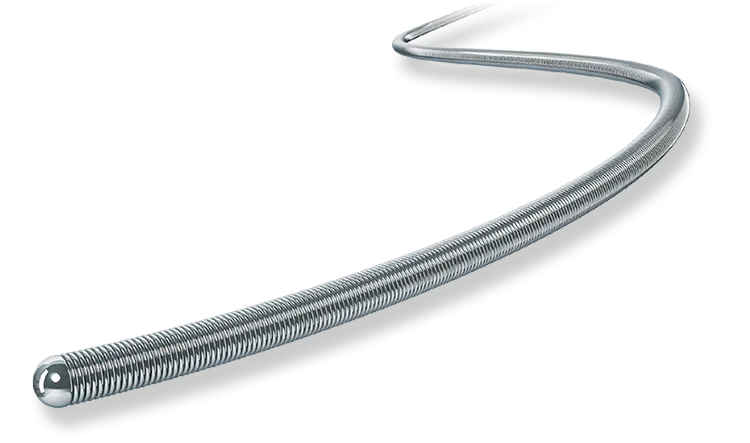
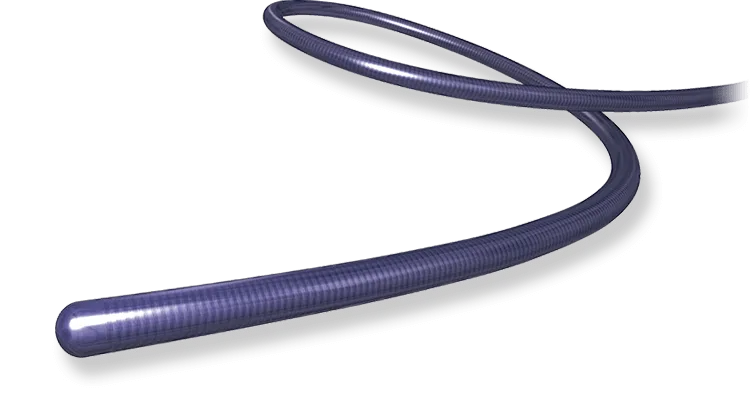
PHIL® Liquid Embolic: Non-Adhesive Precipitating Agent for AVM, DAVF, and Tumour Embolization
Автор: Modern Medical Solutions Editorial Team
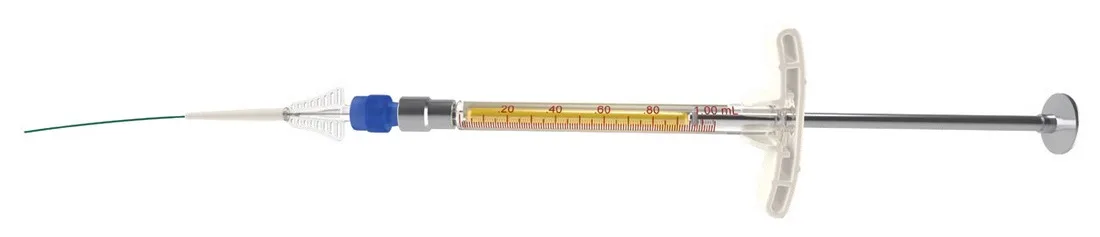
PHIL® (Precipitating Hydrophobic Injectable Liquid) from MicroVention Terumo is a non-adhesive EVOH copolymer liquid embolic available in low, medium, and high viscosities with selectable radiopacity, for AVM, DAVF, and tumour embolization via the Headway DUO dual-marker microcatheter, with retrievable catheter design eliminating the gluing risk of cyanoacrylate agents.
What Is PHIL®?
PHIL® (Precipitating Hydrophobic Injectable Liquid) is a non-adhesive liquid embolic agent from MicroVention Terumo, belonging to the ethylene vinyl alcohol (EVOH) copolymer class. Dissolved in DMSO for delivery, PHIL precipitates into a solid flexible cast upon blood contact as the DMSO dissipates, permanently occluding the target vessel lumen. The ‘non-adhesive’ property is the critical clinical distinction from cyanoacrylate glues: because PHIL does not bond to the microcatheter lumen, the Headway DUO delivery catheter can be retrieved after injection without risk of catheter-to-vessel gluing.
PHIL is indicated for cerebral and spinal AVM embolization, dural arteriovenous fistula treatment, and hypervascular tumour devascularization. It fills the AVM nidal vasculature with a solid polymer cast that eliminates flow through the target territory, reducing haemorrhage risk in AVMs and intraoperative bleeding in tumour surgery.
Viscosity and Radiopacity Options
Three viscosity formulations: Low (25% EVOH) for distal nidal penetration in small feeding pedicles; Medium (30% EVOH) for standard nidal embolization; High (35% EVOH) for proximal pedicle occlusion and high-flow fistulas where lower-viscosity PHIL may reach draining veins too rapidly.
Two radiopacity levels: standard and PHIL HD (high-definition, iodine-based radiopacifier). PHIL HD produces less streak artefact on post-procedure CT/MRI than tantalum-based agents like Onyx, improving post-embolization imaging quality for assessment and surgical planning.
PHIL® vs. Onyx and nBCA
Against Onyx (EVOH/DMSO, Medtronic): PHIL’s iodine-based radiopacifier produces less imaging artefact than Onyx’s tantalum powder; PHIL’s formulation produces a more homogeneous cast with less tendency toward plug formation; and PHIL’s polymer chemistry results in less catheter entrapment risk in operators’ clinical experience. Against nBCA glues: PHIL’s non-adhesive property eliminates the retrieval risk that makes nBCA procedurally demanding, while still providing permanent definitive embolization.
PHIL’s injection window is longer than nBCA (minutes vs. seconds), which is an advantage in complex nidal architecture requiring deliberate slow filling but a disadvantage in high-flow fistulas where rapid cast formation is needed.
Technique Tips
Confirm DMSO compatibility of all delivery materials before use. Pre-prime Headway DUO with 0.25 mL DMSO for 30 seconds to condition the lumen. Inject PHIL at 0.1–0.3 mL/min under continuous fluoroscopy. Stop immediately if PHIL is seen in draining veins or if reflux exceeds 1.5 cm toward the Headway DUO tip.
Wait 5 minutes after injection before attempting Headway DUO retrieval — premature retrieval risks pulling the cast before it has fully solidified at the catheter tip interface, potentially dislodging the embolized segment.
Ordering Through Modern Medical Solutions
Modern Medical Solutions is the authorised MicroVention Terumo distributor for Tajikistan and Afghanistan. PHIL is available in all viscosities (Low, Medium, High) and both standard and HD radiopacity for neurointerventional programmes in Tajikistan and Afghanistan.
Contact Modern Medical Solutions to discuss PHIL alongside Headway DUO, Scepter C for flow arrest during injection, and the broader neurointerventional embolization portfolio.