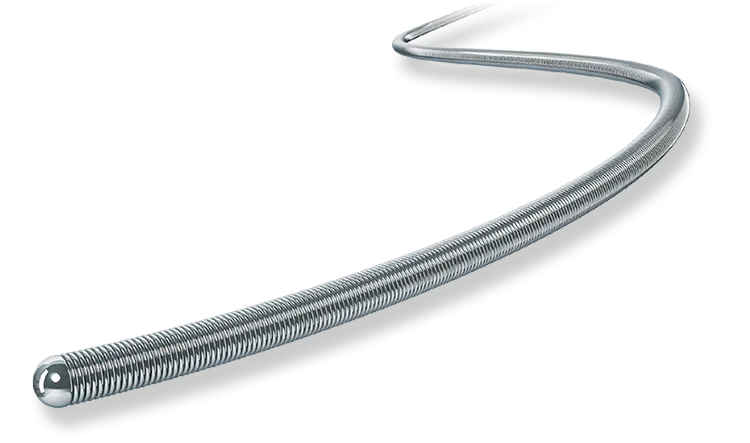
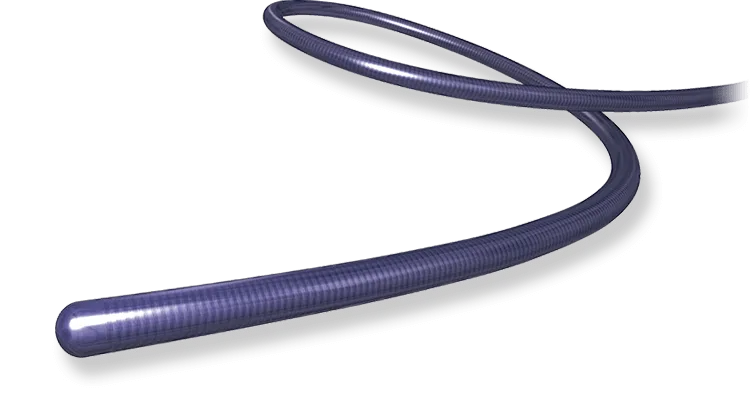
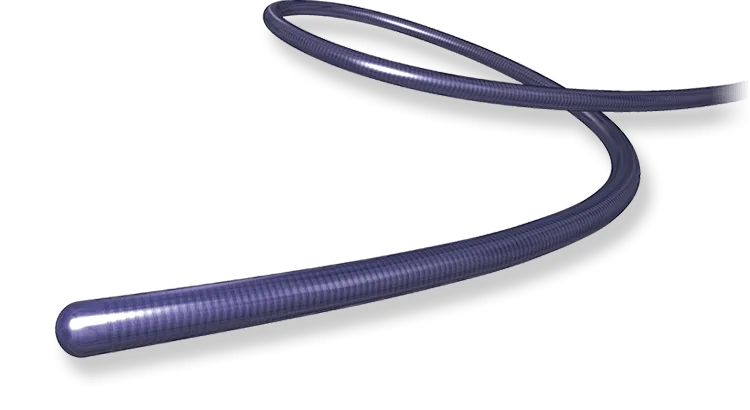
ASAHI CHIKAI®: The Primary 0.014-inch Neurovascular Microguidewire
By Modern Medical Solutions Editorial Team
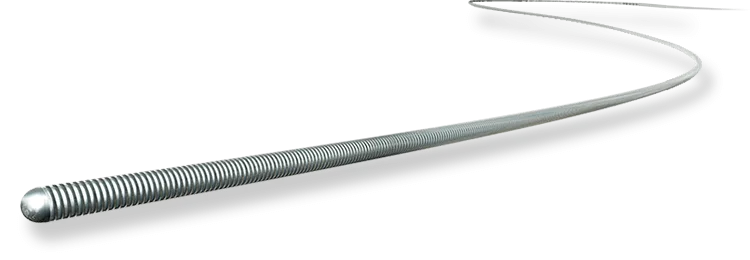
ASAHI CHIKAI® is the foundational 0.014-inch neurovascular microguidewire from Asahi Intecc, providing a 170 cm hydrophilic coating and steerable tip for intracranial navigation during aneurysm coiling, AVM embolization, and intracranial stent and flow diverter delivery.
What Is the ASAHI CHIKAI®?
ASAHI CHIKAI® is a 0.014-inch neurovascular microguidewire designed for intracranial navigation during endovascular procedures including aneurysm coiling, arteriovenous malformation (AVM) embolisation, intracranial stent placement, and flow diverter delivery. It is the primary workhorse microguidewire in Asahi Intecc’s neurointerventional portfolio and the reference wire for the Headway microcatheter family (MicroVention-Terumo), LVIS stents, FRED X flow diverters, and SOFIA aspiration catheters.
The CHIKAI’s 170 cm hydrophilic coating — the longest in the CHIKAI family — provides consistently low friction throughout its advancement from the femoral or radial access point through the cervical carotid or vertebral artery, across the siphon or basilar anatomy, and into the intracranial vessels. This extended hydrophilic zone minimises tip displacement during catheter exchanges, which is critical in intracranial procedures where even 1–2 mm of unintended wire movement can mean the difference between a stable coil microcatheter position and vessel injury.
CHIKAI is available in four configurations: straight and round-curve tip shapes, each in 200 cm and 300 cm working lengths. The round-curve tip is the most widely used configuration — its factory-set gentle distal curve facilitates navigation of intracranial vessel angulations without manual reshaping.
Technical Specifications
Outer diameter: 0.014 inch throughout. Hydrophilic coating: 170 cm (from tip proximally). Tip shapes: straight and round curve. Working lengths: 200 cm and 300 cm. Catalog: WAIN-CKI-200 (straight, 200 cm), WAIN-CKI-200-RC (round curve, 200 cm), WAIN-CKI-300 (straight, 300 cm), WAIN-CKI-300-RC (round curve, 300 cm).
The 300 cm variants are used for procedures requiring exchange-length microwire management — typically flow diverter or intracranial stent delivery procedures where the microcatheter must be exchanged over the wire without losing tip position in the target intracranial segment. The round-curve variants are preferred for most neurointerventional applications where the vessel angulations would require manual tip shaping of a straight wire.
How CHIKAI Compares to Alternatives
CHIKAI vs. CHIKAI black: CHIKAI black has a 150 cm polymer jacket for additional microcatheter push support and is preferred when standard CHIKAI lacks pushability through tortuous intracranial anatomy. Standard CHIKAI is the first choice; CHIKAI black is the escalation for pushability-limited cases.
CHIKAI vs. Terumo Neuroscout: Neuroscout is a competing 0.014-inch neuro microwire with full hydrophilic coating. Both wires are compatible with the Headway family. Institutional experience and microcatheter compatibility determine the primary choice. CHIKAI’s extended 170 cm hydrophilic zone provides more consistent friction reduction over longer access routes — an advantage in taller patients or cases requiring femoral access with long cervical segments.
CHIKAI vs. Synchro (Stryker): Synchro is a standard 0.014-inch neuro wire with hydrophilic coating. Synchro’s softer tip is preferred for very delicate distal intracranial navigation; CHIKAI’s round-curve tip is more appropriate for standard aneurysm approaches where a pre-configured tip angle is sufficient.
Clinical Applications and Indications
Aneurysm coiling is the most common CHIKAI application: the wire is used to navigate the Headway 17 or Headway 21 microcatheter into the aneurysm fundus for coil delivery. The round-curve CHIKAI tip facilitates entry into the aneurysm neck from the parent artery, and once the microcatheter is placed, the wire is removed and coils are deployed through the microcatheter lumen.
Flow diverter deployment — specifically FRED X and Pipeline PED delivery — uses the 300 cm CHIKAI for exchange-length wire management. After initial microcatheter placement in the target vessel, the delivery microcatheter is exchanged over the CHIKAI 300 cm wire for the flow diverter delivery system, maintaining stable intracranial access without re-navigation.
Intracranial stent delivery (LVIS, LVIS Jr) and Y-stenting for bifurcation aneurysms both use CHIKAI for microcatheter navigation and positioning. The wire’s stability during microcatheter advancement in the post-stent angulated anatomy is essential for accurate jailing wire and kissing microcatheter techniques in Y-stent procedures.
Technique and Usage Tips
For aneurysm coiling: shape the CHIKAI round-curve tip to approximately 45°80° of additional curvature at 2–3 mm from the factory curve, creating a double-curve that facilitates aneurysm dome entry. Steam reshaping is preferred over mechanical shaping to preserve the hydrophilic coating integrity at the tip bend. Confirm tip shape under fluoroscopy before advancement into the aneurysm.
Wire stabilisation during microcatheter exchange in flow diverter procedures: use a torque device (Asahi Torq-Vue or equivalent) to hold CHIKAI 300 cm stable at the Y-connector while the delivery microcatheter is advanced over it. Any wire movement during microcatheter advancement can displace the wire tip from its intracranial position, requiring complete re-navigation.
After the procedure, remove CHIKAI with steady, slow retraction — never pull with sudden force as this can cause tip fracture or vessel injury. If the wire feels fixed (adherent to a coil mass or stent strut), advance the microcatheter over the wire to the adherence point before gentle retraction. Never rotate CHIKAI to free it from an adherence point — this risks tip fracture.
Ordering and Availability Through Modern Medical Solutions
Modern Medical Solutions is the authorised MicroVention distributor for Terumo products in the region, supplying ASAHI CHIKAI® in all four configurations (WAIN-CKI-200, WAIN-CKI-200-RC, WAIN-CKI-300, WAIN-CKI-300-RC) to neurointerventional centres in Tajikistan and Afghanistan. CHIKAI is stocked as the primary neuro microwire alongside the Headway microcatheter family.
For neurointerventional programme development — including CHIKAI technique training for aneurysm coiling, flow diverter delivery, and intracranial stenting — contact Modern Medical Solutions via the website. Manufacturer specifications available at medical.asahi-intecc.com.