ASAHI Corsair® Pro: The Gold-Standard CTO Microcatheter for Wire Support and Crossing
By Modern Medical Solutions Editorial Team
ASAHI Corsair® Pro is the world’s most widely used CTO microcatheter, combining a rotatable braided shaft with hydrophilic coating to drill through fibrous occlusions, support guidewire crossing, and enable rapid wire exchange — an essential tool for any centre performing CTO PCI.
What Is the ASAHI Corsair® Pro?
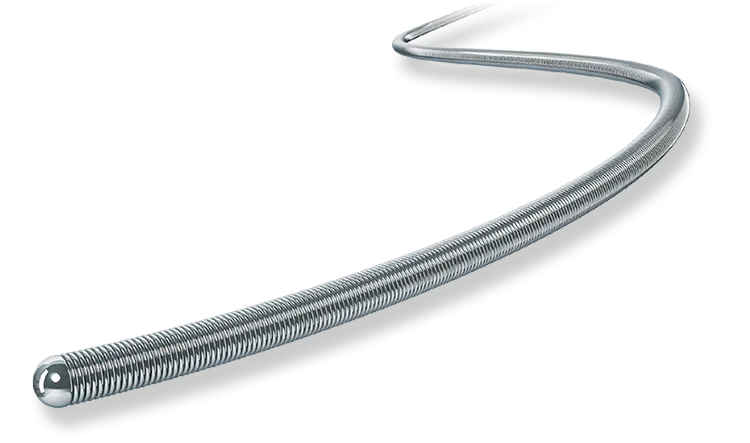
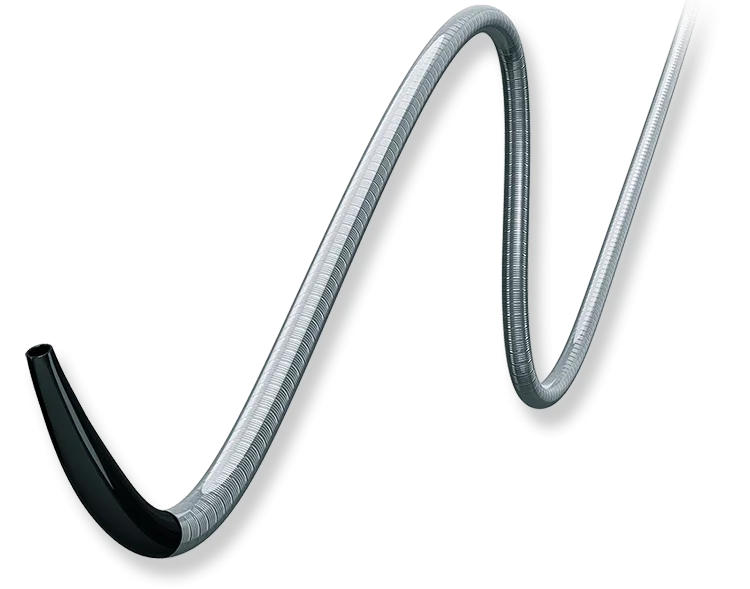
The ASAHI Corsair® Pro is a coronary microcatheter from Asahi Intecc that has become the global standard for CTO PCI. Unlike conventional microcatheters that are pushed passively through occlusions, the Corsair Pro can be actively rotated — its braided shaft transmits torque from the hub to the tip, allowing it to drill through fibrous occlusion tissue independently of the guidewire when standard push alone is insufficient.
This rotatable braided shaft is the Corsair Pro’s defining feature. The braid construction distributes rotational force along the shaft length, enabling the microcatheter to advance through fibrous material by rotation even when the guidewire has crossed but a standard over-the-wire balloon cannot advance. In addition to independent crossing capability, the Corsair Pro serves two equally important roles: guidewire support (providing back-up for CTO crossing wires) and wire exchange (allowing seamless guidewire swaps without losing position).
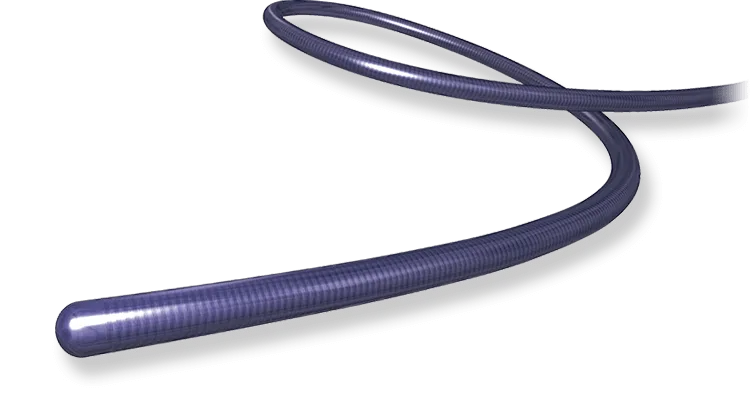
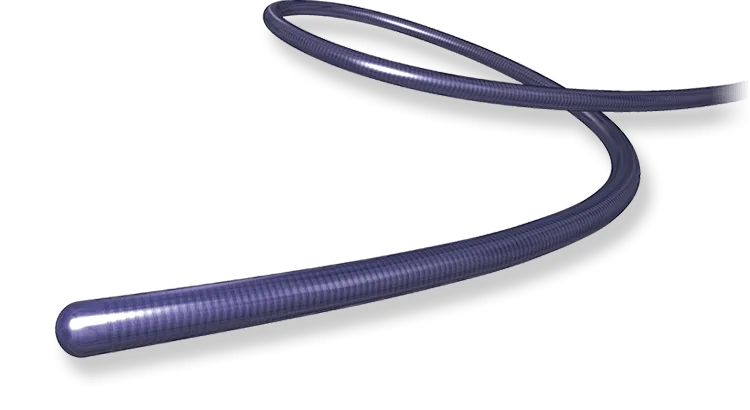
The distal 60 cm of the Corsair Pro is coated with a hydrophilic layer, reducing friction in the distal coronary segment and septal collateral channels. The tip diameter is 1.3F with a shaft of 2.6F — larger than Corsair Pro XS — making it the standard choice for most CTO cases while the XS variant is reserved for the tightest passages.
Technical Specifications
Tip diameter: 1.3F (approximately 0.43 mm). Distal shaft diameter: 2.6F (approximately 0.87 mm). Tip inner diameter: 0.015 inch. Shaft inner diameter: 0.018 inch. Hydrophilic coating: distal 60 cm. Working lengths: 135 cm (CSR135-26P) and 150 cm (CSR150-26P). Compatible guidewire size: 0.014 inch.
The 0.015/0.018-inch inner diameter profile accommodates all 0.014-inch coronary guidewires with adequate clearance for smooth wire rotation and exchange. The 135 cm variant is used for standard-length guide catheters (90–100 cm) in most adult coronary anatomy. The 150 cm variant is required for very long vessels, guide catheter extensions, or cases where extra working length is needed (e.g., right radial access with a shepherd’s-crook RCA).
How Corsair Pro Compares to Alternatives
Corsair Pro vs. Corsair Pro XS: XS has a smaller distal shaft (2.1F vs. 2.6F) and is used for tight proximal caps and septal channel navigation where standard Corsair Pro cannot advance. For the majority of CTO cases, Corsair Pro is preferred as its larger shaft provides better support and more effective rotational drilling force than XS.
Corsair Pro vs. ASAHI Caravel: Caravel is a slender 1.4F/1.9F microcatheter for very small vessels and septal channels where even Corsair Pro XS is too large. Caravel lacks the rotatable drilling function of Corsair Pro and is used primarily for wire support and exchange in these smaller passages.
Corsair Pro vs. Teleflex Turnpike family: Turnpike (standard and Spiral) are competing rotatable microcatheters. Turnpike Spiral has a helical tip that may provide additional drilling capability in very dense fibrous tissue. Most published CTO series use Corsair Pro as the reference microcatheter; institutional experience with one system should guide the primary choice.
Clinical Applications and Indications
Wire support during CTO crossing is the most fundamental Corsair Pro role: the microcatheter is positioned 2–5 mm proximal to the cap, providing back-support that allows CTO wires to transmit maximum tip force to the cap without shaft buckling. Every CTO wire from Fielder XT through Confianza Pro should be used with Corsair Pro support.
Wire exchange is the second critical function: after CTO crossing, the Corsair Pro is advanced over the crossing wire to the distal true lumen, the crossing wire (e.g., Gaia Second) is removed, and a workhorse wire (SION or SION Black) is inserted for device delivery. This exchange takes seconds and maintains exact position without any lumen loss.
Independent crossing (rotation technique): when a guidewire has crossed but balloons cannot advance, the Corsair Pro is placed on the wire at the proximal cap and rotated clockwise (10–20 turns) while advancing with gentle forward pressure. The braided shaft drills through the fibrous tissue surrounding the wire track, enlarging the path for balloon advancement.
Technique and Usage Tips
Rotation protocol: rotate the Corsair Pro hub clockwise 10–20 turns before advancing. Once the resistance changes to ‘give’, advance 2–5 mm while continuing rotation. Counterrotate (clockwise rotation to counterclockwise) at the same turn count before retracting to avoid coil unwinding. Do not exceed 30 cumulative clockwise turns without counterrotation.
Hydrophilic coating maintenance: flush the microcatheter’s hub port with saline every 3–5 minutes during the procedure to maintain coating lubricity in the distal 60 cm. A dry hydrophilic-coated microcatheter can adhere to calcified vessel segments, increasing the force required for advancement and withdrawal.
For septal collateral channel navigation in retrograde CTO cases, advance Corsair Pro through the septal channel over a Fielder XT wire using slow clockwise rotation (5–10 turns). Avoid aggressive forward force in septal channels — the force limit for safe septal navigation is approximately 100–150 g of forward push; beyond this, septal channel perforation risk increases significantly.
Ordering and Availability Through Modern Medical Solutions
Modern Medical Solutions supplies ASAHI Corsair® Pro in both 135 cm (CSR135-26P) and 150 cm (CSR150-26P) configurations to CTO programmes in Tajikistan and Afghanistan as the authorised Asahi Intecc distributor. Corsair Pro is the single most important microcatheter in the CTO toolkit and is recommended for stock in both lengths.
For centres establishing CTO programmes, Modern Medical Solutions can coordinate Corsair Pro training sessions covering wire support technique, wire exchange protocols, and the rotation advancement technique. Contact the team via the Modern Medical Solutions website for ordering and clinical support.