Fielder® FC Guidewire: Polymer-Jacketed Frontline Wire for Tortuous Coronary Anatomy
By Modern Medical Solutions Editorial Team
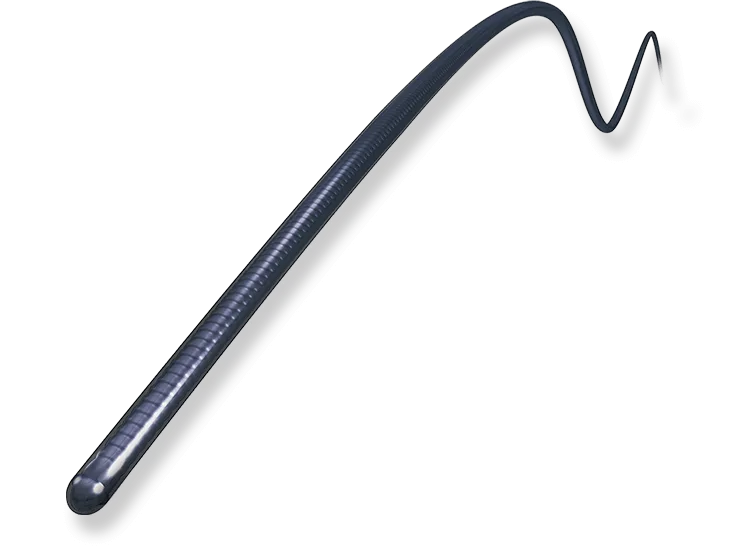
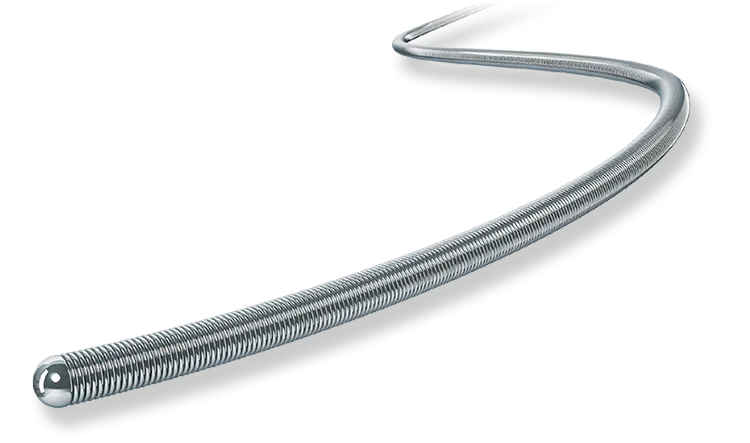
Fielder® FC bridges the gap between standard frontline coronary wires and CTO-specific tools, offering a polymer-jacketed 0.014-inch shaft with 0.8 gf tip load for smooth navigation through tortuous or angulated coronary anatomy where standard SION may encounter friction.
What Is the Fielder® FC?
Fielder® FC is a frontline coronary guidewire from Asahi Intecc designed for vessels with significant tortuosity or angulation where standard hydrophilic wires encounter frictional resistance during advancement. Despite carrying the Fielder name — associated primarily with CTO wires — Fielder FC is not a CTO crossing wire: it is a 0.014-inch standard-diameter frontline wire intended for complex coronary anatomy in elective and urgent PCI.
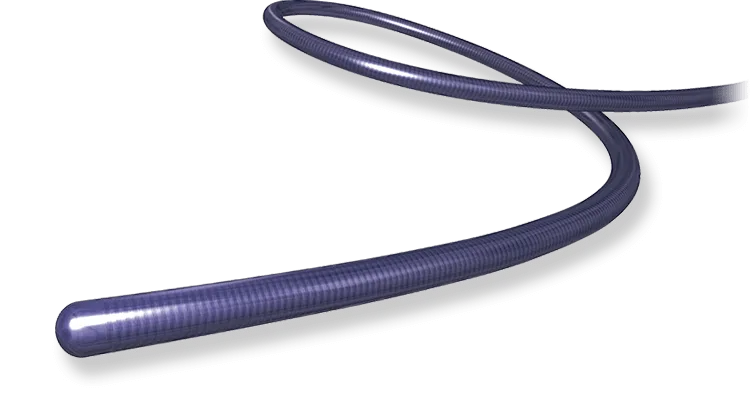
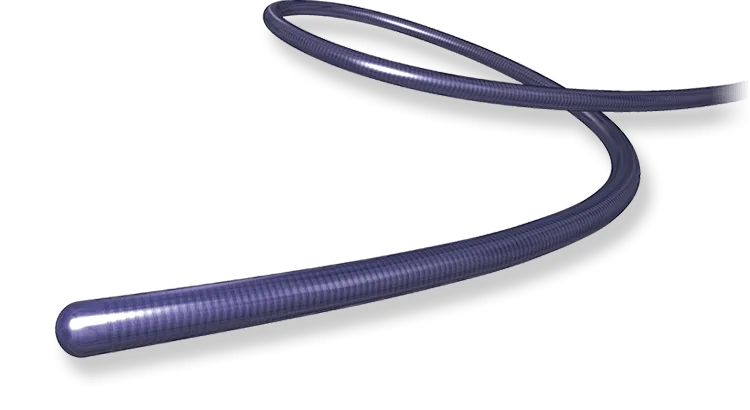
The ‘FC’ designation refers to the polymer jacket coating that covers the distal 20 cm of the wire, combined with a hydrophilic outer layer. This dual-layer coating provides a surface that is both smooth (reducing frictional drag against vessel walls and device inner lumens) and lubricious in the presence of saline or contrast, enabling the wire to track through multiple-bend anatomy with less tendency to prolapse or kink. The 11 cm coil segment and 0.8 gf tip load complete the profile.
Fielder FC is available in straight and J-tip configurations at both 180 cm and 300 cm working lengths, offering the same catalog flexibility as the SION family for operators who prefer to standardise on a single tip-load class across their case mix.
Technical Specifications
Outer diameter: 0.014 inch throughout (non-tapered). Tip load: approximately 0.8 gf. Coil length: 11 cm. Coating: polymer + hydrophilic layer over the distal 20 cm. Available lengths: 180 cm and 300 cm. Tip shapes: straight and J. Catalog numbers: AGP140001 (straight, 180 cm), AGP140001J (J-tip, 180 cm), AGP140301 (straight, 300 cm), AGP140301J (J-tip, 300 cm).
The 11 cm coil (shorter than SION’s 28 cm) means the wire transitions from flexible coil to polymer-jacketed shaft closer to the tip, resulting in a stiffer overall distal profile compared to SION. This is intentional: Fielder FC is designed for cases requiring more distal shaft support during device delivery, not for cases requiring maximum tip compliance. The polymer jacket’s smooth outer surface is the primary design rationale.
How Fielder FC Compares to Alternatives
Fielder FC vs. SION: Standard SION has a 28 cm coil and 28 cm hydrophilic coating, providing a longer flexible distal segment. In smooth, moderately tortuous vessels, SION’s longer flexible zone tracks more naturally. Fielder FC’s shorter coil and polymer jacket are advantageous when the problem is distal-shaft friction rather than tip compliance — specifically, when a balloon or microcatheter cannot advance over the wire despite correct tip placement because the wire shaft is dragging against vessel walls.
Fielder FC vs. SION Black: Both have a polymer jacket and similar tip loads (~0.8 gf), but SION Black’s polymer zone is 40 cm vs. Fielder FC’s 20 cm. SION Black also offers a pre-shape tip option not available in Fielder FC. For cases requiring maximum polymer coverage, SION Black is the more appropriate choice. Fielder FC’s shorter polymer zone retains a bit more of the standard wire feel proximally.
Fielder FC is not a substitute for Fielder XT in CTO cases. Its non-tapered 0.014-inch tip cannot probe microchannels, and its coating does not extend full-length as in Fielder XT. Operators should reserve Fielder FC for its intended role in tortuous non-occluded or sub-totally occluded vessels.
Clinical Applications and Indications
Tortuous right coronary arteries, particularly those with proximal shepherd’s-crook angulation, are the primary indication for Fielder FC. In these cases, the polymer jacket reduces the interaction between the wire shaft and the proximal RCA bend, allowing balloon and stent advancement with less wire-tip movement during device delivery. The J-tip variant (AGP140001J, AGP140301J) is preferred for initial navigation in these cases, reducing the risk of side-branch entry at the PDA/PL bifurcation.
Circumflex arteries with high-take-off angles from the aorta and multiple obtuse-marginal branch points represent a second common indication. The Fielder FC’s smooth polymer surface allows the operator to advance devices over the wire with less tendency for the wire to migrate across branch ostia during device loading.
Fielder FC is also useful in reopening subtotally occluded vessels (TIMI 1 or 2 flow) where the residual lumen is tortuous. In these cases, the wire needs to track through a small residual channel without the additional penetration force of a CTO wire — Fielder FC’s tip load of 0.8 gf is appropriate, and its polymer jacket supports subsequent device delivery.
Technique and Usage Tips
For severely tortuous proximal segments, begin with a J-tip configuration to reduce the risk of dissection during initial advancement. Once the wire has passed the most angulated proximal segment, it can be straightened by advancing a balloon or microcatheter to the distal tip, which eliminates the J-tip curve for lesion crossing. Then retract the balloon/microcatheter, leaving the wire in position across the lesion.
When advancing balloons or stents over Fielder FC in tortuous vessels, maintain gentle guide catheter deep engagement to provide additional support from the proximal end. Avoid excessive rotation of Fielder FC once in position, as the polymer jacket can resist rotational torque return differently from standard wire coils, potentially leading to torque wind-up if the wire is rotated multiple turns in one direction without counterrotation.
In cases where Fielder FC successfully navigates the vessel but subsequent device delivery remains difficult due to severe calcification or angulation at the lesion, consider upgrading to a support wire (Grand Slam®) for the delivery phase while preserving the Fielder FC position as a marker wire in a second lumen if a dual-wire technique is used.
Ordering and Availability Through Modern Medical Solutions
Modern Medical Solutions stocks Fielder® FC in all four catalog configurations (AGP140001, AGP140001J, AGP140301, AGP140301J) for supply to interventional cardiology centres in Tajikistan and Afghanistan. Fielder FC is typically ordered alongside the SION family to provide frontline wire coverage across the full range of coronary anatomy complexity.
For ordering enquiries, technical specifications, or clinical support in selecting between Fielder FC and the SION family for specific anatomical cases, contact Modern Medical Solutions through the website. Manufacturer specifications available at medical.asahi-intecc.com.