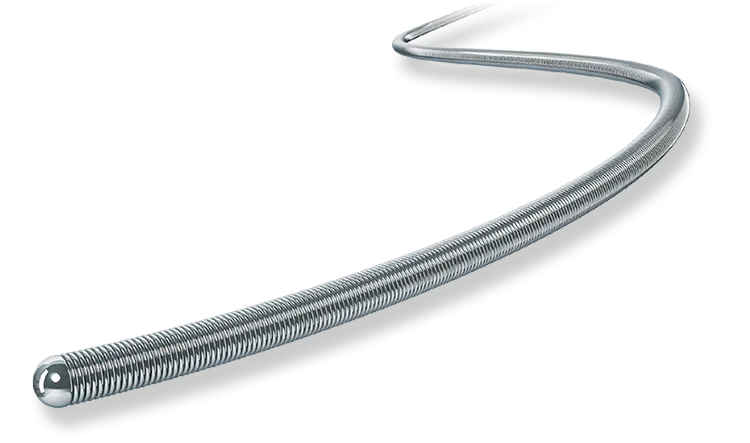
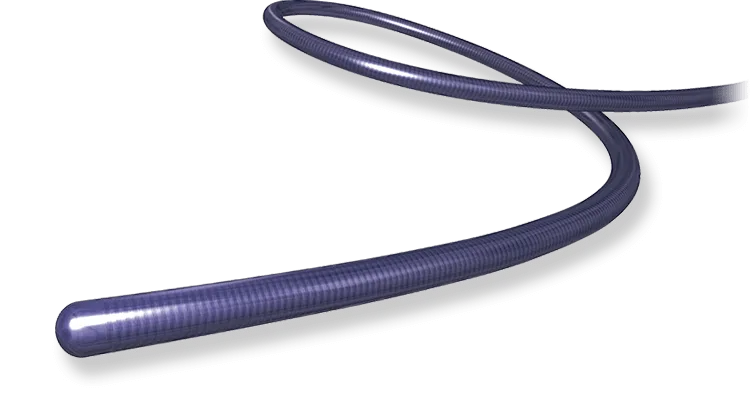
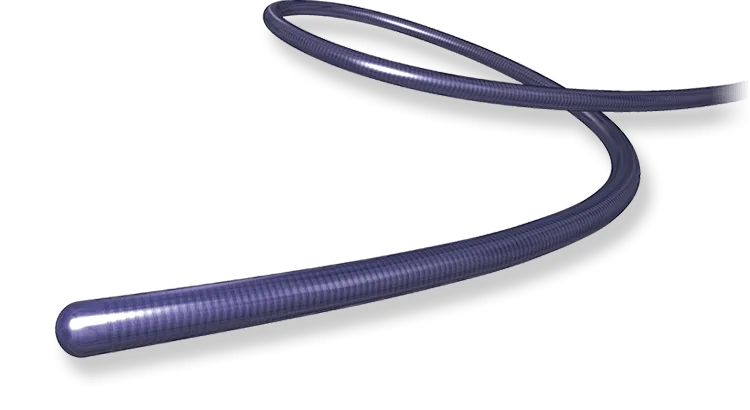
ASAHI Gaia®: True 1:1 Torque Delivery for CTO Crossing
By Modern Medical Solutions Editorial Team
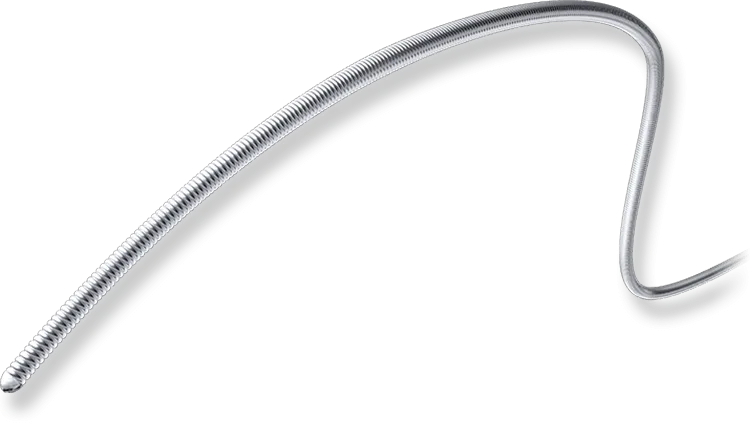
The ASAHI Gaia® — Gaia First, Second, and Third — introduced rotating-core composite construction to CTO guidewires, delivering genuine 1:1 torque transmission under high tip loads and setting a new standard for controlled CTO cap penetration after Fielder XT failure.
What Is the ASAHI Gaia® Series?
The ASAHI Gaia® series represents a fundamental engineering advance in CTO guidewire design. Unlike conventional CTO wires with a single-core construction (where torque winds up proximally and is released unpredictably at the tip), Gaia wires use a rotating composite core that decouples the inner rotating element from the outer coil structure. This allows the tip to follow each operator rotation in near real-time — true 1:1 torque — even at the elevated tip loads required for fibrous cap penetration.
The series comprises three grades with escalating tip loads: Gaia First at 1.7 gf, Gaia Second at 3.5 gf, and Gaia Third at 4.5 gf. All three share a tapered distal tip (0.010–0.012 inch at the tip, transitioning to 0.014 inch shaft), a pre-shape-only tip configuration, and a 40 cm hydrophilic coating zone. The pre-shape tip is a deliberate design choice: the tip angle is factory-optimised for the penetration mechanics that characterise each Gaia grade, and manual reshaping is not recommended.
Gaia wires are the standard escalation after Fielder XT-A failure in the antegrade wiring algorithm, and they bridge the critical gap between low-load probing wires and the very high tip-load Confianza Pro (9–12 gf) that is reserved for the hardest calcified caps.
Technical Specifications
All Gaia series wires: tip diameter 0.010–0.012 inch (tapered), shaft diameter 0.014 inch, hydrophilic coating 40 cm from tip, tip shape pre-shape only, working length 190 cm and 300 cm. Core construction: rotating composite core (distinguishes Gaia from all preceding Asahi CTO wires).
Gaia First: tip load 1.7 gf. Catalog: AHW14R007P (190 cm), AHW14R307P (300 cm). Gaia Second: tip load 3.5 gf. Catalog: AHW14R008P (190 cm), AHW14R308P (300 cm). Gaia Third: tip load 4.5 gf. Catalog: AHW14R011P (190 cm), AHW14R311P (300 cm). The 300 cm variants are important for retrograde CTO cases where exchange-length wire management is required after retrograde guidewire externalisation.
How Gaia Compares to Alternatives
Gaia vs. MIRACLEbros®: MIRACLEbros 3, 6, and 12 gf are the classic tiered penetration wires with silicone coating and no polymer jacket or rotating core. Gaia’s rotating core provides superior torque response at equivalent tip loads, reducing the risk of torque wind-up and sudden tip jump that can occur with MIRACLEbros in severely tortuous vessels. Many CTO operators have replaced MIRACLEbros escalation with Gaia escalation as the preferred tiered approach.
Gaia vs. Confianza Pro (9 gf): Gaia Third (4.5 gf) leaves a substantial gap before Confianza Pro (9 gf). In caps that resist Gaia Third, the operator should consider whether the cap is truly calcified nodular (appropriate for Confianza Pro) or whether the subintimal approach (STAR, LAST) is safer. Gaia Next 3 (6 gf, second generation) bridges this gap more effectively — see the Gaia Next article for details.
The rotating core construction means that Gaia wires are more forgiving of multiple rotation cycles than standard-core wires, as torque wind-up is reduced. However, Gaia wires should still not be over-rotated more than 5–6 turns cumulatively without counterrotation, as the pre-shape tip can be damaged by excessive rotational forces.
Clinical Applications and Indications
Gaia First (1.7 gf) is indicated when Fielder XT or XT-A has failed to cross the cap but the cap appears relatively soft on angiography (no calcium on fluoroscopy, CTA shows fibrous rather than calcified cap). The modest increase in tip load from Fielder XT’s 0.8 gf to 1.7 gf, combined with superior torque transmission, frequently enables crossing of these lesions.
Gaia Second (3.5 gf) is the most-used Gaia grade in published CTO series, reflecting its utility in the common scenario of a moderately fibrous cap with some calcium. It is the appropriate choice after Gaia First failure and before considering the harder caps that warrant Gaia Third or Confianza Pro.
Gaia Third (4.5 gf) is reserved for visibly calcified caps where Gaia Second has failed to penetrate. At this stage of the algorithm, parallel wiring with two Gaia wires or the antegrade dissection-re-entry technique (using Stingray system) are important alternatives if Gaia Third also fails, rather than immediately escalating to Confianza Pro.
Technique and Usage Tips
The pre-shape tip is essential to Gaia’s function: the factory curve optimises the tip angle for the torque-transmission mechanics of the rotating core. Never attempt to manually reshape a Gaia tip — doing so disrupts the geometry and may damage the rotating core joint. Accept the factory pre-shape and adjust your cap engagement approach accordingly.
Microcatheter positioning is critical: advance the Corsair Pro or Caravel to within 2–5 mm of the proximal cap before engaging with the Gaia wire. The microcatheter’s presence just behind the tip provides maximum support and ensures that each quarter-turn rotation of the Gaia wire is fully transmitted to the tip rather than dissipated as shaft deflection. Advance the microcatheter incrementally as the wire crosses the occlusion.
After crossing with Gaia, do not advance the microcatheter aggressively into the occlusion segment — confirm true-lumen position with contrast injection through the microcatheter before proceeding. The pre-shaped tip’s curvature means that the wire exits the occlusion at an angle; gentle counterrotation combined with microcatheter advancement straightens the trajectory for balloon delivery.
Ordering and Availability Through Modern Medical Solutions
Modern Medical Solutions supplies all three Gaia grades — First (AHW14R007P/AHW14R307P), Second (AHW14R008P/AHW14R308P), and Third (AHW14R011P/AHW14R311P) — to CTO programmes in Tajikistan and Afghanistan as the authorised Asahi Intecc distributor. For centres establishing a CTO programme, a starting inventory of Gaia First and Second in both 190 cm and 300 cm is recommended.
CTO wire algorithm training incorporating the Gaia series is available through Modern Medical Solutions clinical support. Contact the team via the website for ordering and educational support. Device specifications: medical.asahi-intecc.com.