LVIS™ and LVIS™ Jr: Fully Radiopaque Braided Stents for Stent-Assisted Aneurysm Coiling
By Modern Medical Solutions Editorial Team
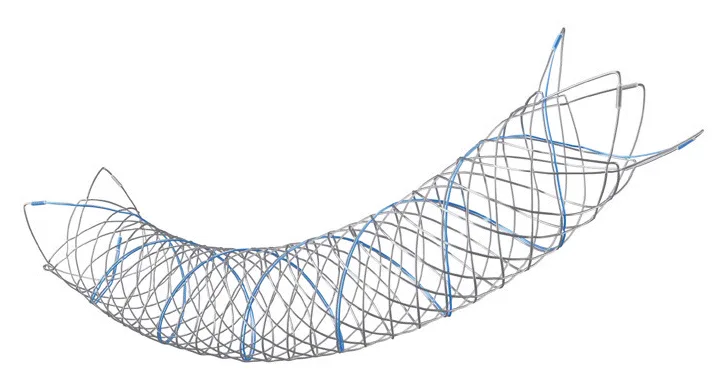
The LVIS™ (Low-Profile Visualized Intraluminal Support) and LVIS™ Jr from MicroVention Terumo are fully radiopaque braided closed-cell nitinol stents for stent-assisted coil embolization of wide-neck intracranial aneurysms, with LVIS covering 3.5–5.5 mm vessels via Headway 21 and LVIS Jr extending treatment to 2.0–3.5 mm vessels via Headway 17.
What Are LVIS™ and LVIS™ Jr?
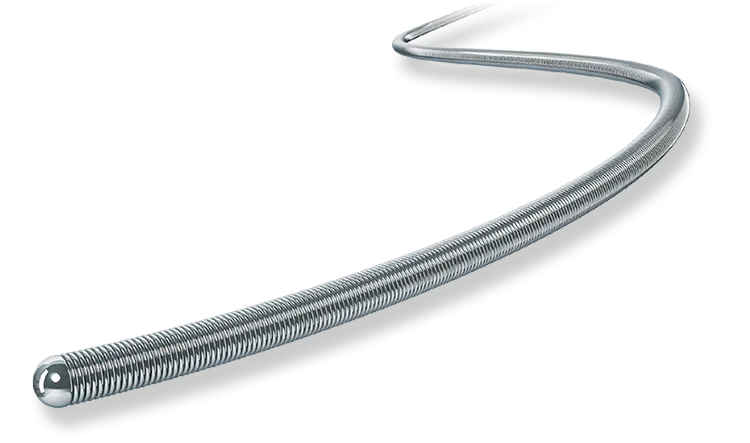
LVIS™ (Low-Profile Visualized Intraluminal Support) and LVIS™ Jr are braided closed-cell nitinol intracranial stents from MicroVention Terumo designed for stent-assisted coil embolization of wide-neck intracranial saccular aneurysms. The “Low-Profile” designation refers to the stent’s ability to be delivered through a small microcatheter (Headway 17 for LVIS Jr; Headway 21 for LVIS) while the “Visualized” designation refers to the stent’s full radiopacity across its entire braided structure — every wire of the stent braid is visible under fluoroscopy, unlike competing stents that rely on end markers alone for position confirmation.
Full stent radiopacity is a clinically significant advantage. During stent deployment, the operator can confirm the position of the entire stent body — not just the end markers — in real time, enabling precise landing zone control and early identification of incomplete wall apposition. This visualisation capability is particularly valuable in tortuous anatomy where the stent may not deploy symmetrically.
Technical Specifications and Catalog Reference
LVIS: deployed diameters 3.5–5.5 mm (in 0.5 mm steps), lengths 17–49 mm. Catalog: 212517-CAS (3.5 mm × 17 mm) through 214049-CAS (4.0 mm × 49 mm) and 215049-CAS (5.0 mm), 215549-CAS (5.5 mm). Delivered via Headway 21. LVIS Jr: deployed diameters 2.5–3.5 mm, for vessel diameters ≥2.0 mm. Catalog: 172010-CASJ (2.0 mm vessel, 10 mm length) through 172537-CASJ (2.5–3.5 mm vessel, 37 mm length). Delivered via Headway 17.
The braided construction provides approximately 23% metallic surface area coverage across the stent body. This coverage level is sufficient for neck scaffolding and mild flow diversion effect but is below the threshold for dedicated flow diversion treatment. The closed-cell braid provides uniform strut distribution across the entire stent length, ensuring consistent coil retention and neck scaffolding geometry.
LVIS™ vs. LVIS™ Jr: Selecting the Right Device
LVIS is used when the parent artery diameter at the landing zones is 3.5–5.5 mm — the ICA, proximal MCA M1, basilar artery, and proximal posterior cerebral artery. LVIS Jr extends stent-assisted coiling to smaller vessels with diameters down to 2.0 mm — the distal MCA M1, ACA A1, PCA P1, and other smaller-calibre aneurysm-bearing vessels. The Headway 17 delivery for LVIS Jr allows it to access more distal anatomy than the Headway 21-requiring LVIS.
Against the LVIS EVO (also from MicroVention Terumo), both LVIS and LVIS Jr represent the established generation with the longer clinical track record. The EVO provides improved delivery mechanics in tortuous anatomy; for straightforward cases from accessible anatomy, LVIS and LVIS Jr remain the first-choice devices.
Clinical Applications
LVIS and LVIS Jr are indicated for stent-assisted coil embolization of wide-neck intracranial aneurysms where the dome-to-neck ratio or neck-to-parent-artery diameter ratio makes primary coiling technically impossible or carries unacceptable herniation risk. The jailing technique — parking the coiling microcatheter in the sac before stent deployment, then coiling through the stent interstices — is standard for both LVIS and LVIS Jr.
DAPT is required before and after both LVIS and LVIS Jr deployment. Standard loading is aspirin 100 mg and clopidogrel 75 mg for a minimum of 5 days before the procedure, continuing for a minimum of 3 months post-procedure. Platelet function testing (VerifyNow P2Y12 assay) is recommended to confirm adequate P2Y12 inhibition before proceeding.
Ordering Through Modern Medical Solutions
Modern Medical Solutions is the authorised MicroVention Terumo distributor for Tajikistan and Afghanistan. LVIS and LVIS Jr are available across the full catalog range for neurointerventional programmes in Tajikistan and Afghanistan.
Contact Modern Medical Solutions to discuss LVIS and LVIS Jr alongside the LVIS EVO, Headway 17 and 21 microcatheters, and CHIKAI guidewires as a complete stent-assisted coiling system.