Herat Regional Hospital completes surgical wing upgrade
By Modern Medical Solutions Editorial Team
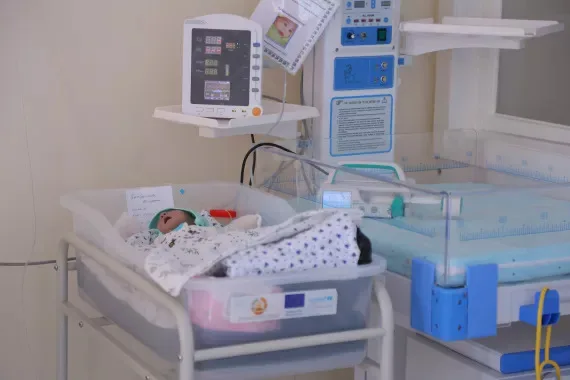
Herat Regional Hospital inaugurated a modernised surgical and intensive care wing funded through international humanitarian grants, adding four new operating theatres and a post-operative monitoring unit equipped with modern vital-signs technology.
A Modernised Wing for Surgery and Critical Care
Expanding a hospital's surgical and intensive care capacity reshapes what an entire region can treat. New operating theatres and a post-operative monitoring unit together raise both the volume and the complexity of cases a facility can safely undertake, because surgery and recovery are inseparable parts of a single continuum. The addition of modern vital-signs monitoring is precisely what makes higher-acuity work defensible rather than reckless.
For a regional hospital serving a wide catchment, this kind of upgrade reduces the need to transfer patients elsewhere for care that could now be delivered locally. Keeping surgical and critical care closer to home shortens journeys, lowers transfer risk and eases pressure on distant tertiary centres that would otherwise absorb every complex case from the province.
The symbolic weight of a modernised wing should not be underestimated either. A visibly improved facility can help retain skilled staff who might otherwise seek work elsewhere, and it signals to the surrounding population that credible care is available closer to home, which in turn encourages people to present earlier rather than delaying until a condition has become critical and far harder to treat.
Why Post-Operative Monitoring Defines Capacity
The operating theatre often gets the attention, but recovery capacity frequently sets the true ceiling on what a hospital can do. A monitoring unit equipped with modern vital-signs technology allows staff to detect deterioration early, manage complex recoveries and support patients through the fragile hours after surgery. Without it, ambitious procedures carry a level of risk that responsible teams simply should not accept.
This is the analytical heart of the upgrade. Four theatres are only as useful as the recovery capacity behind them, and pairing new operating space with a dedicated monitoring unit reflects a mature understanding of how surgical throughput actually works in practice. Capacity is a system property that emerges from balanced investment, not a simple count of how many theatres a facility can list on paper.
Four Theatres and the Question of Throughput
Adding four operating theatres changes the arithmetic of what a hospital can accomplish in a given period. Surgical throughput has long been a binding constraint in many regional facilities, where a single overburdened theatre forces long waiting lists and difficult prioritisation between competing cases. Expanding theatre capacity relieves that bottleneck directly and lets a hospital treat conditions before they progress to more dangerous stages.
Yet theatres do not operate in isolation from the rest of the hospital. Their value depends on the supply of surgical consumables, the availability of anaesthesia and the recovery capacity waiting behind them, so the addition of theatres alongside a monitoring unit reflects a coherent rather than piecemeal expansion. Capacity added at one point must be matched at adjacent points or it simply relocates the constraint elsewhere.
The analytical observation is that throughput is a chain, and a hospital gains most when it widens several links at once. An upgrade that pairs new theatres with strengthened recovery and monitoring is investing in the whole chain rather than a single conspicuous link, which is what makes the added capacity genuinely usable rather than nominal.
How Critical Care Underpins Advanced Procedures
Robust critical care is a prerequisite for advancing toward more complex interventions over time. Procedures with a risk of acute complications, including many cardiac and vascular interventions, depend on the ability to monitor and rescue patients afterwards. A strong post-operative and intensive care base therefore widens the range of what a hospital can eventually offer, acting as an enabling layer beneath any future specialist ambition.
Viewed through an interventional lens, infrastructure like this is that enabling layer made concrete. A facility that can support high-acuity recovery is better positioned to develop catheter-based services in future, because the safety net those procedures require is already in place. Hospitals mapping such a trajectory can review the access and support catheter range that underpins many vascular interventions as they plan ahead.
What Modern Vital-Signs Monitoring Brings
A monitoring unit equipped with modern vital-signs technology changes the texture of post-operative care. Continuous measurement of heart rhythm, blood pressure, oxygenation and other parameters gives staff an early warning of deterioration that intermittent manual checks cannot match, and that lead time is frequently what allows a complication to be caught while it remains reversible rather than after it has cascaded.
Monitoring also supports safer staffing. When a unit can display the status of several recovering patients at a glance, a limited team can supervise a larger caseload without sacrificing vigilance, which matters greatly in settings where skilled personnel are scarce. Technology here extends the reach of people rather than replacing them, amplifying the attention of every nurse on the floor.
The analytical significance is that monitoring converts recovery from a passive wait into an actively managed phase of care. That shift is precisely what makes higher-acuity surgery, and eventually more complex intervention, defensible within a regional hospital's remit rather than beyond it. Recovery ceases to be the interval where gains from surgery are quietly lost to undetected deterioration and becomes instead a phase where those gains are actively protected and consolidated.
Sustaining a Grant-Funded Upgrade
Infrastructure funded through humanitarian grants faces a familiar test once the ribbons are cut: whether it can be sustained. Theatres and monitoring units require consumables, maintenance, biomedical support and trained staff, and durable benefit depends on planning for these recurring needs from the outset rather than treating the build itself as the finish line of the project.
What keeps upgraded facilities functioning long after commissioning is continuity of supply and technical support. Hospitals planning to equip or resupply new capacity can discuss requirements directly through our contact and quote channels, ensuring the consumables and support behind modern theatres and monitoring remain reliably available for years to come rather than dwindling once the initial grant has been spent and attention has moved elsewhere.