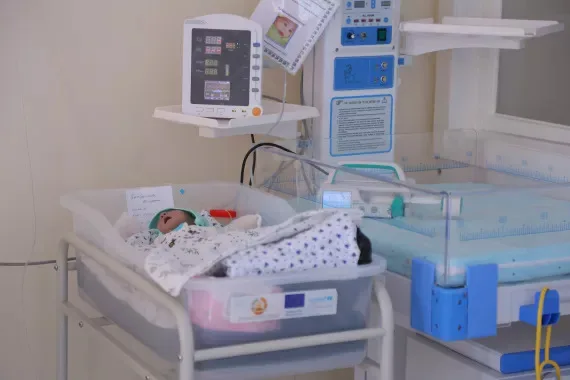
Long-term health strategy through 2030
By Modern Medical Solutions Editorial Team
Tajikistan's national health strategy focuses on infrastructure development, medical equipment modernization, digital health and improved patient care through 2030.
A Decade Framed Around Modern Capacity
Long-term health strategies matter because health systems change slowly. Hospitals take years to build, workforces take longer to train, and equipment fleets are replaced on cycles measured in decades rather than budget years. A strategy that looks toward 2030 gives planners the horizon they need to sequence these investments sensibly, rather than reacting to whichever pressure happens to be loudest in a given year and leaving the deeper structural work perpetually deferred to some more convenient time that never arrives.
The four pillars named here, infrastructure, equipment modernisation, digital health and improved patient care, are deeply interdependent rather than separable projects. New buildings without modern equipment are empty shells; modern equipment without maintenance and trained staff quickly falls idle; and digital systems only deliver value when the physical and human foundations beneath them are sound. A credible strategy treats these as a single interlocking programme rather than four separate wish lists competing for the same limited budget.
Setting a fixed endpoint also imposes useful discipline on everyone involved. It forces choices about what comes first and what can wait, and it creates milestones against which progress can be measured honestly. Without that structure, ambitious health goals tend to dissolve into a series of disconnected projects, each impressive on its own but adding up to less than the sum of its parts because nobody sequenced them into a coherent whole that builds steadily toward a defined destination.
Equipment Modernisation as a Supply Question
Modernising medical equipment is often imagined as a one-off purchasing event, but through a supply-chain lens it is a continuous commitment stretching across the entire life of every device. Every scanner, ventilator or monitor introduced into a facility creates a recurring demand for consumables, calibration and spare parts. A strategy that funds acquisition without funding the pipeline behind it risks accumulating impressive hardware that cannot be kept in service once the initial warranty and supplies are exhausted.
Sustainable modernisation therefore plans for total lifecycle cost, not sticker price. It asks who will supply the reagents, who will service the machine, and how quickly a failed component can be replaced when it inevitably breaks. When those answers are built into procurement from the start, equipment stays clinically useful for years; when they are ignored, the newest and most sophisticated devices are often the first to go dark, precisely because they are the hardest to keep supplied, calibrated and serviced without a plan.
There is also a strong case for standardisation across a national fleet. When facilities share common equipment specifications, spare parts and consumables become interchangeable, technicians can be trained once and deployed widely, and bulk purchasing lowers unit costs. A modernisation strategy that coordinates these choices deliberately, rather than letting each facility buy in isolation, dramatically reduces the long-term burden of keeping the whole system running and makes shortages far easier to absorb by sharing stock across sites.
Digital Health Depends on Physical Reliability
Digital health, from electronic records to telemedicine, is frequently presented as a clean leap forward, but it rests on decidedly unglamorous foundations. Connectivity, power stability and device interoperability determine whether a digital system genuinely helps clinicians or merely adds friction to an already busy day. A strategy through 2030 that treats digitisation as software alone, without the hardware and maintenance it rides on, will struggle to realise its promise in the rural and remote facilities that arguably need it most.
There is a supply dimension here too, and it is easily missed in the excitement of new technology. Digital devices carry their own consumables, upgrade paths and support contracts, and they age faster than most clinical equipment. Planning for their replacement and servicing from the start prevents the familiar pattern of pilot projects that dazzle briefly at launch and then fade quietly once the initial funding ends and the first devices begin to fail without anyone clearly responsible for repairing or replacing them.
Infrastructure That Serves Patient Care
The ultimate test of any strategy is whether it improves the experience and outcomes of patients. Infrastructure investment translates into better care only when new capacity is matched to genuine need and supported by reliable health equipment and adequate staffing. A well-located, well-equipped facility shortens the distances patients travel and the delays they endure, turning a line on a planning map into a service people can actually reach when they are unwell and need help quickly.
For a country with dispersed rural populations, distribution logic applies to care itself: services must reach people rather than expecting people to reach services. A strategy that keeps that principle in view, and that funds the maintenance and supply pipelines behind its buildings, stands the best chance of delivering durable improvement by the end of the decade rather than a scattering of showpiece facilities that struggle to stay operational once the opening ceremonies are over and the ordinary work of keeping them supplied begins.
Sequencing Investment Over Time
The advantage of a multi-year plan is that it allows investment to be staged rather than crammed into a single frantic burst of spending. Foundations come first, then equipment, then the digital and human systems that use them, each layer supporting the next. Rushing that sequence tends to strand resources, leaving equipment waiting for buildings or software waiting for connectivity; respecting it tends to compound them, so that each completed layer immediately increases the value and usability of the next one added on top.
Institutions that support projects with regulatory and market-access guidance can help ensure that imported equipment arrives precisely when facilities are ready to install and use it, rather than sitting in storage depreciating and at risk of damage or obsolescence. Aligning the timing of clearance, delivery and readiness is one of the least visible but most decisive factors in whether a long-term strategy actually delivers on schedule, and it is exactly the kind of coordination that separates a plan on paper from measurable improvement in care.
Frequently asked questions
Why does a health strategy need a ten-year horizon?
Health systems evolve slowly. Hospitals take years to construct, clinical workforces take even longer to train, and equipment is replaced on multi-year cycles. A long horizon lets planners sequence these investments logically, funding foundations before equipment and equipment before the digital and human systems that rely on it, rather than reacting year to year to whatever pressure is most immediate at budget time.
What is the difference between buying equipment and modernising it sustainably?
Buying equipment is a single transaction; sustainable modernisation is an ongoing commitment. Each device generates recurring demand for consumables, calibration and spare parts, and requires trained staff and servicing to remain usable. Planning for total lifecycle cost, not just the purchase price, keeps equipment in clinical service and protects the original investment across its full working life instead of only its first months.