Modern medical equipment procurement increasing
By Modern Medical Solutions Editorial Team

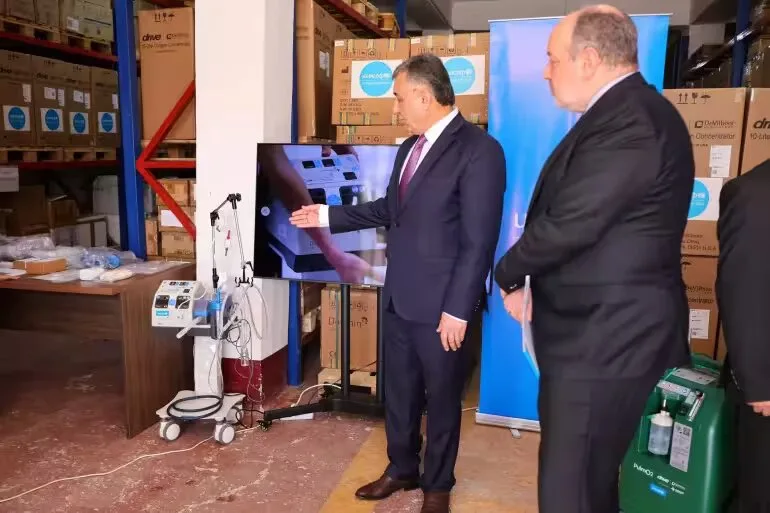
Government investments and international partners continue supporting procurement of advanced medical devices through international tenders.
Sustained investment in advanced medical devices signals a health system that is moving beyond basic provision toward higher-capability care. When government funding and international partners align on procurement, the volume and complexity of purchasing rise together, placing new and unfamiliar demands on the people and processes that must turn budgets into working equipment installed at the bedside rather than parked in a warehouse.
The reliance on international tenders is significant in its own right. Competitive tendering is intended to secure fair pricing, transparency and quality, but it also introduces documentation, evaluation and compliance requirements that facilities must be genuinely equipped to handle. The mechanism only delivers real value when specifications are sound, when bids are assessed rigorously, and when the winning offer can actually be imported, commissioned and supported over its working life.
Rising investment therefore raises expectations as much as capabilities across the system. The scrutiny that accompanies public and partner funding means procurement teams are increasingly judged not only on what they ultimately buy, but on how defensibly and transparently they arrive at each decision along the way. That shift places a premium on clear records, consistent criteria and the ability to justify choices long after a contract has been awarded and the equipment installed.
How International Tenders Shape Sourcing
International tenders open a market to a wide field of suppliers, which can improve choice and pricing but simultaneously demands careful specification writing. Vague requirements invite disputes and a flood of unsuitable offers, while excessive over-specification can unfairly narrow competition to a single favoured product. Striking the right balance between these two failure modes is one of the most consequential and underrated skills in the whole discipline of device procurement.
Evaluating international bids also means assessing far more than the headline price on the front page. Delivery reliability, after-sales service, spare-part availability and regulatory compliance all bear heavily on true value. A device that is cheaper to buy but effectively unsupported locally can cost far more over its working life, which is precisely why total cost of ownership belongs at the very centre of tender scoring rather than as an afterthought.
Teams scoping realistic options early in the process benefit from understanding the breadth of what the market offers. Reviewing a supplier's full product catalogue at the planning stage can help procurement staff frame specifications around what is genuinely available and supportable in the region, rather than around an idealised device that no one can actually deliver.
Compliance Across Advanced Device Classes
Advanced equipment tends to sit higher on the risk scale, and with that position comes stricter registration and import expectations. Documentation of conformity, clear labelling and clearly defined servicing responsibility all become effectively non-negotiable. Facilities that build these compliance checks directly into tender evaluation avoid the costly and demoralising discovery that a winning device cannot in fact be lawfully imported, commissioned or maintained once the contract has been signed.
Analysed through a procurement lens, the steady growth in advanced purchasing raises the stakes for institutional capability. Teams increasingly need people who can read technical specifications critically, verify regulatory status independently and manage complex contracts through delivery and commissioning. Where those skills remain thin on the ground, investment can easily outpace the ability to deploy it well, leaving capable and expensive equipment underused or idle for want of the expertise to bring it into service.
The lesson is that money and capability must grow in step with one another. Advanced procurement rewards systems that invest in their own people and processes as seriously as they invest in the devices themselves, because the two are ultimately inseparable in practice. Budgets alone do not modernise a health system; they merely create the opportunity, which trained and well-supported procurement teams then either seize effectively or quietly squander through avoidable mistakes.
Turning Investment into Working Equipment
Procurement success is measured at the bedside, not at the moment a contract is signed. Installation, commissioning, staff training and maintenance planning all determine whether advanced devices actually improve care in practice. A tender that quietly ends at delivery, with no provision for these later steps, risks leaving genuinely capable equipment idle while patients continue to go without the benefits it was purchased to provide.
For facilities riding this wave of investment, the durable advantage lies in process maturity rather than in any single purchase. Clear specification libraries, disciplined bid evaluation and strong, honest supplier relationships steadily convert rising budgets into reliable capability. As tenders grow more advanced and more scrutinised, that unglamorous groundwork is what separates the systems that modernise smoothly from those that stall repeatedly in the gap between purchase and use.
Import Documentation for Advanced Devices
Advanced equipment often faces heavier documentation requirements at the border than simpler devices, and international tenders can complicate this further by drawing suppliers from many different regulatory backgrounds. Ensuring that conformity evidence, labelling and technical files are complete and consistent before shipment prevents costly delays once equipment arrives. Import problems discovered at the port are far harder and slower to resolve than those anticipated during tender evaluation.
Building import readiness into the procurement process is therefore a practical safeguard rather than mere bureaucracy. Confirming that a preferred device can actually be imported and registered, and clarifying who is responsible for each document, saves both time and money. Structured import support can help teams assemble the paperwork that customs and regulators expect for higher-risk equipment.
Treating documentation as an integral part of sourcing, rather than an obstacle encountered afterwards, keeps advanced procurement moving without unpleasant surprises. The facilities that plan for import realities alongside clinical requirements are consistently the ones whose investments reach the ward on schedule and stay compliant thereafter. For high-value tenders in particular, the difference between anticipating documentation needs and reacting to them can amount to months of avoidable delay and considerable frustration for the clinicians waiting to use the equipment.