UNICEF delivers 500+ medical devices to Tajikistan
By Modern Medical Solutions Editorial Team
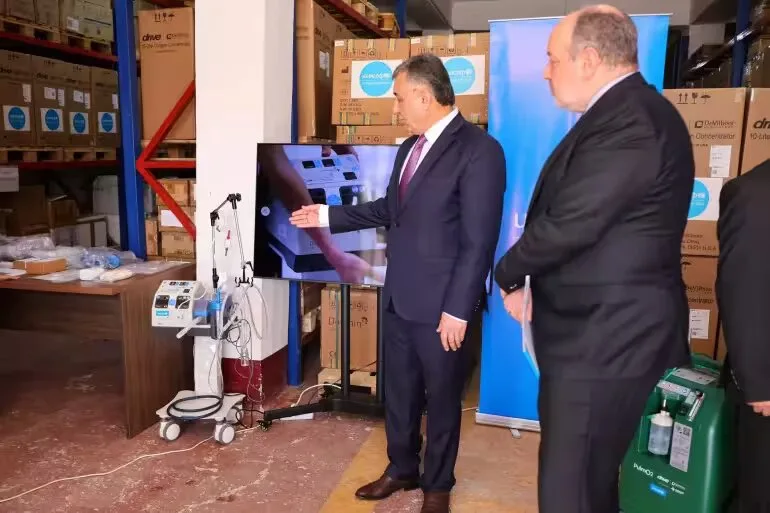
UNICEF transferred more than 500 units of medical equipment, including CPAP devices and oxygen concentrators, to the Ministry of Health. The equipment is being distributed to 73 healthcare facilities nationwide.
A donation of this scale reshapes the immediate supply picture for a national health system. When a partner such as UNICEF channels equipment through a ministry of health, the transfer typically arrives as a co-ordinated batch rather than as piecemeal purchasing spread across months. That difference changes how facilities plan intake, storage and commissioning across a wide and often difficult geography, because the whole consignment must be absorbed roughly at once rather than trickling in as budgets allow.
The stated mix of CPAP devices and oxygen concentrators points clearly to respiratory support as the priority behind the transfer. Both device classes are workhorses of general and neonatal wards, and both depend on reliable electricity, a steady stream of consumables and adequately trained staff to deliver their intended benefit once they leave the central warehouse. Hardware alone rarely improves outcomes; it is the surrounding system that converts a delivery into better care at the bedside.
For a distribution reaching 73 sites, the ministry effectively becomes the hub of a national logistics operation. Allocation decisions, transport arrangements and readiness checks all have to be sequenced so that equipment is not stranded in a warehouse or delivered to a site that cannot yet use it. The scale is an opportunity, but it also concentrates risk into the planning phase, where small errors multiply across dozens of destinations.
Donor Channels and Ministry Custody
Donated equipment usually enters a country under arrangements that differ markedly from ordinary commercial imports. The receiving ministry commonly takes legal custody, and the goods move through customs under exemption or facilitated procedures negotiated in advance. Even so, national rules on device conformity, labelling and post-market responsibility still apply in principle, and clarity over who owns, insures and services each unit matters for the entire lifecycle rather than only the moment of handover.
Distributing to 73 facilities is a logistics exercise as much as a clinical one. Central authorities must decide allocation criteria, arrange onward transport over long distances and confirm that every receiving site can actually operate what it is sent. A concentrator delivered to a clinic with unstable power, or a CPAP unit sent where no one has been trained to set it up, represents effort that will not translate into care until those gaps are closed.
Organisations working on device compliance in the region can advise on the paperwork that keeps a donation moving smoothly, from customs documentation through to the checks that follow. Even where equipment is gifted, the receiving institution benefits from treating medical device registration as part of the plan, so that future spares and replacements procured commercially face no unexpected obstacles.
Procurement Lens on Large Transfers
From a procurement standpoint, a donation offsets capital cost but immediately shifts attention to the total cost of ownership. Concentrators and CPAP units need filters, tubing, humidification supplies and periodic servicing, and those recurring items rarely arrive in the same quantities as the hardware itself. Budgeting for consumables and spares, and identifying reliable local supply for them, is where many equipment programmes quietly succeed or slowly stall in the months after the headlines fade.
There is also a standardisation question worth weighing carefully. A single co-ordinated transfer can help harmonise device models across many sites, which simplifies training, stock-holding and troubleshooting. The counterweight is dependence on continued supply of matching parts; if that supply falters, a standardised fleet can age together and fail together. Prudent planners record model numbers, warranty terms and service contacts at intake so that future tenders can either replicate the fleet or deliberately diversify it.
Analysed through a procurement lens, the durable value of a transfer like this depends less on the unit count than on the systems built around it. Facilities that fold the donation into maintenance schedules, keep clean asset records and plan consumable purchasing in advance tend to keep the equipment in service far longer. Those that treat delivery as the finish line often find capable devices sitting idle within a year for want of a filter or a repair.
Commissioning at 73 Sites
Delivery is not the same as readiness. Each concentrator and CPAP unit needs unpacking checks, functional testing and, ideally, biomedical sign-off before clinical use begins. Facilities also need to fold the new stock into maintenance schedules from day one, so that a fault at a single site does not silently remove a device from service for months while no one is quite sure who is responsible for fixing it.
Training is the quiet determinant of impact across a national roll-out. Respiratory devices are forgiving to switch on but unforgiving of poor set-up, and turnover among clinical staff means that refresher sessions are rarely optional. Where a distribution spans dozens of hospitals, a train-the-trainer model tends to spread competence faster and more durably than one-off demonstrations given at the point of delivery and never repeated.
For any facility scoping how to sustain a transfer of this kind, engaging early with a partner who understands the regional supply and compliance landscape can smooth the path. General information about the distributor's role in the region is available for teams planning their next steps, and a short conversation via our contact page can help clarify what commissioning and ongoing support realistically require.
Equity in Nationwide Allocation
Spreading equipment across 73 sites inevitably raises questions of fairness that planners cannot avoid. Rural and remote facilities often carry the greatest unmet need yet possess the least capacity to install and sustain new devices, so a purely equal split may not produce equal benefit. Allocation criteria that weigh existing capability, patient volume and geographic disadvantage together tend to distribute impact more sensibly than a flat division of units alone.
Transparency in how those decisions are made matters almost as much as the decisions themselves. When facilities understand why they received a particular allocation, disputes ease and co-operation improves across the network. Clear, documented criteria also create a defensible record that later reviews of the programme can examine, which is valuable when public and donor resources are involved and accountability is expected.
Ultimately, a large transfer is judged not by how many units left the warehouse but by how evenly its benefits reached patients. Thoughtful allocation, honest record-keeping and attention to the facilities most at risk of being left behind are what turn an impressive headline figure into genuinely equitable improvement in care.
Frequently asked questions
Do donated medical devices still need national registration in Tajikistan?
Requirements vary by programme, but even donated equipment usually has to satisfy national rules on device conformity, safety labelling and post-market accountability. Donations often move through facilitated customs channels, yet the receiving institution remains responsible for lawful operation and traceability. Confirming the registration status of each model early avoids delays when spares or replacements are later procured commercially. Organisations offering device registration support can clarify which steps apply to a given transfer.
What recurring costs follow a delivery of oxygen concentrators and CPAP devices?
The main ongoing costs are consumables and servicing. Concentrators need filters and periodic maintenance, while CPAP units require tubing, masks or interfaces, and humidification supplies. Electricity and staff training add to the running total. Because these items are consumed at different rates than the hardware, procurement teams should budget separately for them and identify reliable local supply so that devices remain in service well beyond the initial donation.