ASAHI Corsair® Pro XSProduct Code (REF): CSR135-21S
ASAHI Corsair® Pro XS (Extra Small) reduces the distal shaft profile of the Corsair Pro from 2.6F to 2.1F while keeping the same 1.3F tip — creating a catheter that occupies significantly less space within the coronary lumen during the critical moment of crossing a tight CTO segment. This lower profile improves crossability in cases where the standard Corsair Pro cannot advance due to tight anatomy, heavy calcification, or a very narrow proximal cap entry point that the larger shaft cannot enter. Despite the smaller outer diameter, the Corsair Pro XS retains the full braided rotatable shaft construction of the original platform — it can be rotated for drilling advancement, exchanged over a guidewire, and used for selective contrast injection. The 0.017 in (0.019 in on standard Pro) inner diameter accommodates 0.014 in guidewires. The 70 cm (135 cm length) or 85 cm (150 cm length) hydrophilic coating extends further distally than the standard Pro, aiding advancement once the tip has crossed the proximal cap. Corsair Pro XS is the preferred microcatheter when anatomy requires the smallest possible crossing profile without sacrificing rotational capability.
Available under product codes CSR135-21S, CSR150-21S.
Sizes & Specifications
- Outer diameter
- 1.3F tip / 2.1F distal shaft
- Inner lumen
- 0.017 in
- Working length
- 135 cm / 150 cm
- Design
- Braided, rotatable shaft
Manufacturer: Asahi Intecc Co., Ltd. · Reference source: medical.asahi-intecc.com
Design & Technology
Technical characteristics and diagrams as published by Asahi Intecc.
Lesion crossability
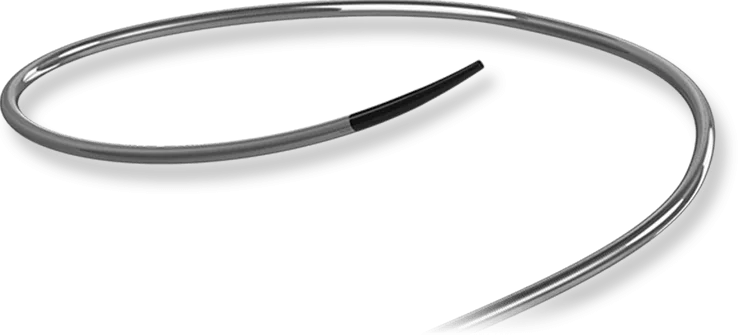
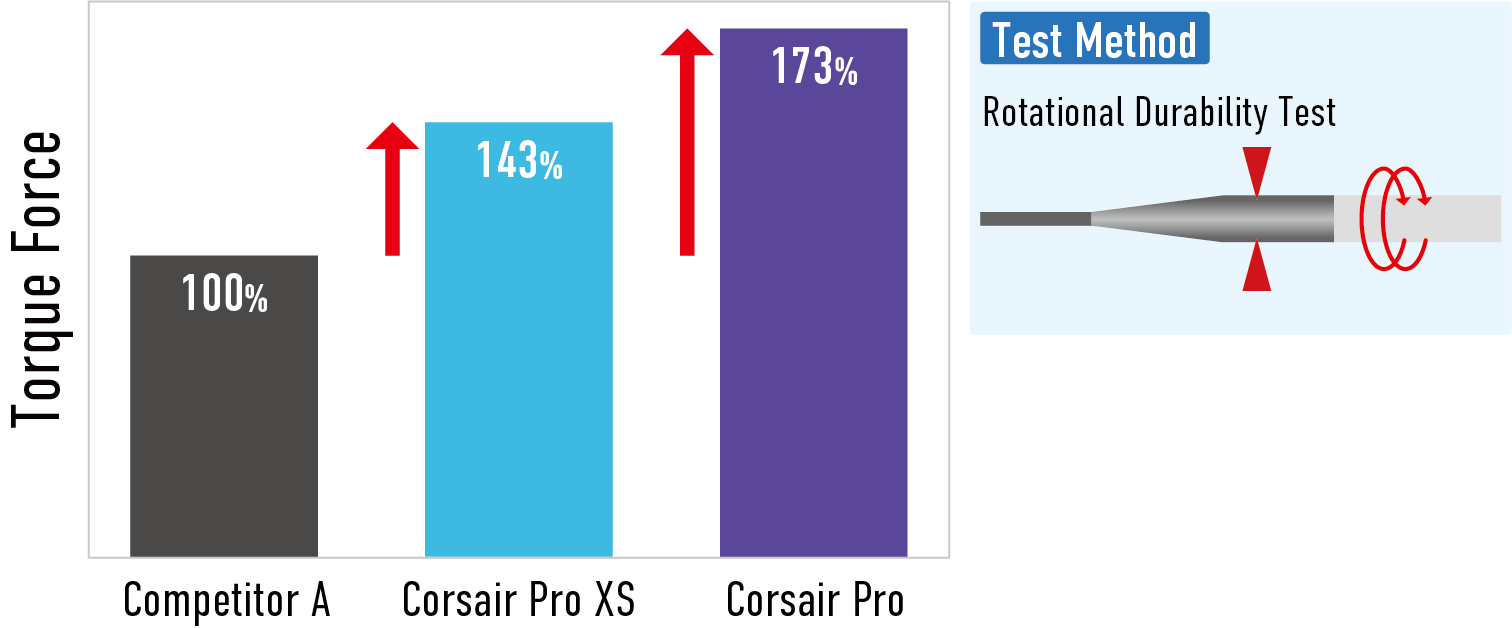
ASAHI Corsair Pro XS has a lower profile but has 43% more torque force at 10 rotations.
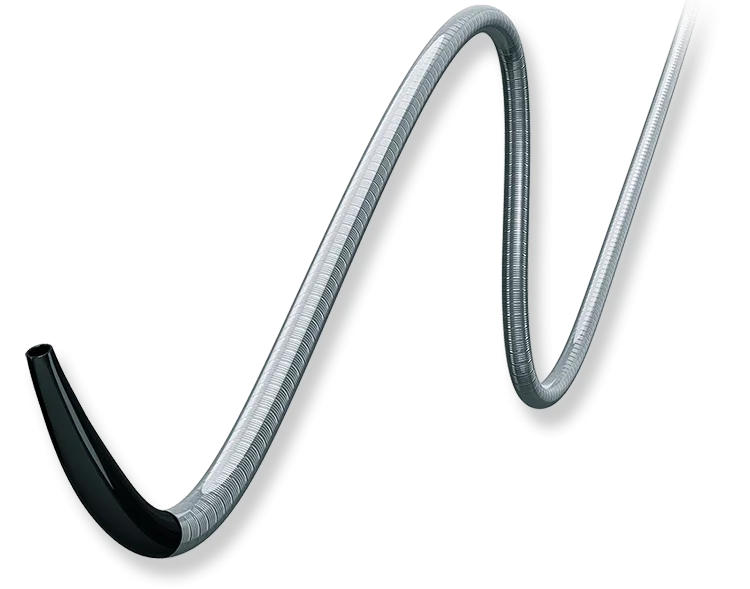
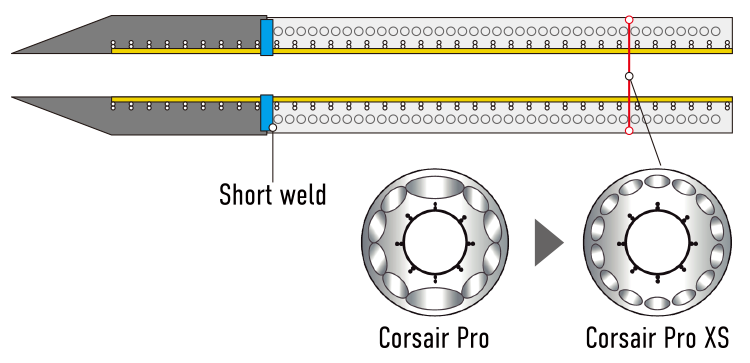
New SHINKA-Shaft and flexible tip ease distal access during retrograde approach.
-New SHINKA-Shaft- Shorter weld of ACT ONE tip provides high trackability.
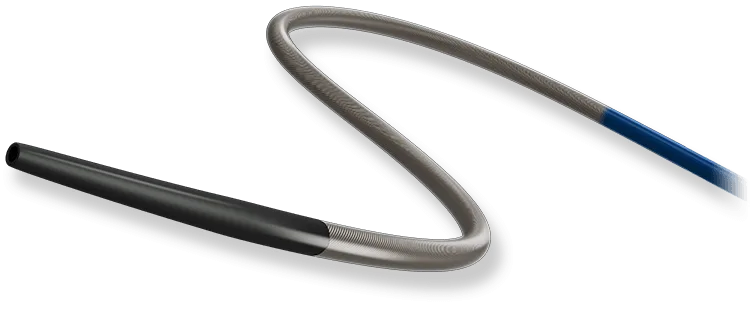
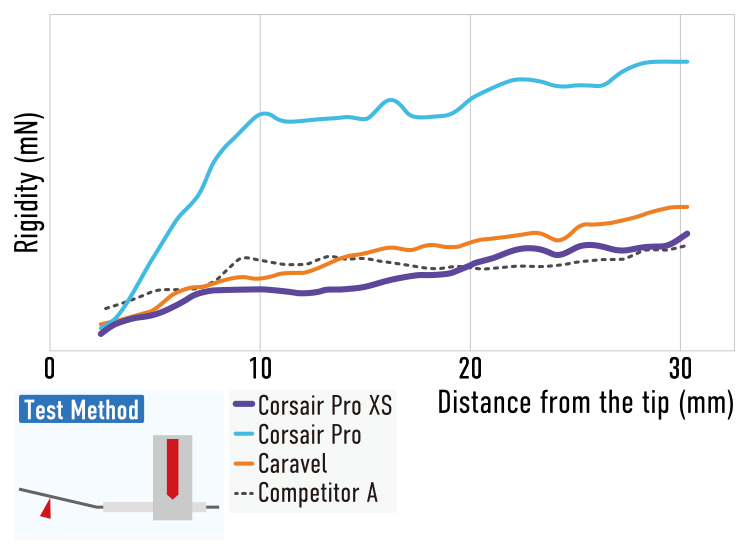
Flexible tip High tip-trackability
Most flexible tip increases guide wire or vessel trackability, and ease the access to the distal portion of severely tortuous channels.
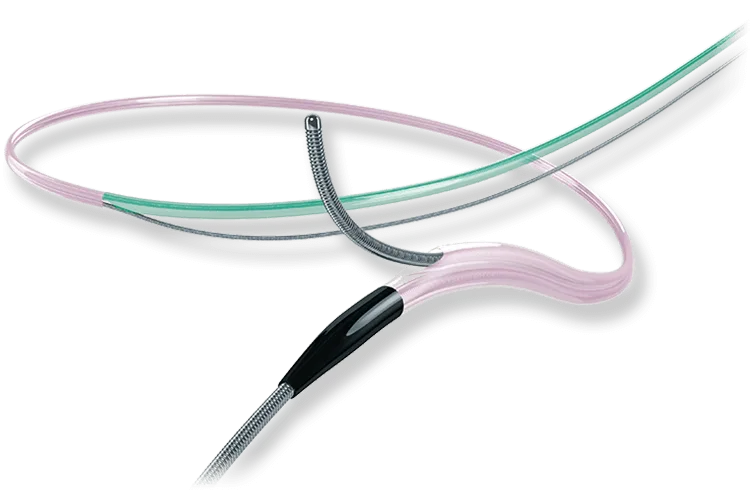
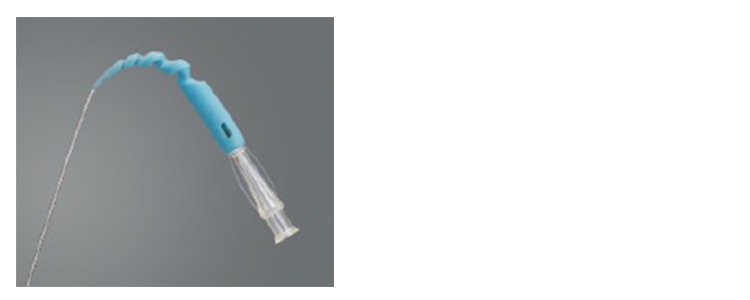
Kink resistance at proximal shaft
Spiral Protector Flexibility of the proximal hub is improved to protects the proximal shaft when bent during catheter advancement or withdrawal.
Limited rotation
Do not rotate the catheter in the same direction, clockwise or counterclockwise, more than 10 times.

Structure

Product Identification & Specifications
Reference identifiers for procurement, registration and tender documentation.
| Product Code | CSR135-21S |
|---|---|
| REF Numbers | CSR135-21S, CSR150-21S |
| Manufacturer | Asahi Intecc Co., Ltd. |
| Brand | Asahi Intecc |
| Product Family | Coronary Microcatheters & Guide Catheters |
| Country Availability | Tajikistan, Afghanistan |
Clinical Applications
The ASAHI Corsair® Pro XS is a coronary microcatheter in the Coronary Microcatheters & Guide Catheters family from Asahi Intecc Co., Ltd., used by interventional specialists in procedures where a coronary microcatheter of this class is indicated. It is supplied in 2 configurations (catalog codes CSR135-21S through CSR150-21S) to match anatomical and procedural requirements.
For the complete indications for use, contraindications and instructions for use (IFU), request the official Asahi Intecc documentation through our clinical team. Modern Medical Solutions supplies the ASAHI Corsair® Pro XS to hospitals and cath labs across Tajikistan and Afghanistan.
Ordering Information
Catalog reference codes as published by Asahi Intecc. Contact us to confirm current availability.
| Product Name | Catalog No. | Usable Length | Tip(O.D) | Distal Shaft(O.D) | Proximal Shaft(O.D) | Tip(I.D) | Shaft(I.D) | Hydrophilic Coating Length |
|---|---|---|---|---|---|---|---|---|
| ASAHI Corsair Pro XS | CSR135-21S | 135cm | 0.44mm (1.3Fr) | 0.71mm (2.1Fr) | 0.95mm (2.9Fr) | 0.38mm (0.015") | 0.48mm (0.019") | 70cm |
| ASAHI Corsair Pro XS | CSR150-21S | 150cm | 0.44mm (1.3Fr) | 0.71mm (2.1Fr) | 0.95mm (2.9Fr) | 0.38mm (0.015") | 0.48mm (0.019") | 85cm |
Downloads & Documentation
Instructions for use (IFU), technical datasheets and clinical literature for the ASAHI Corsair® Pro XS are available on request from our clinical team.
Request DocumentationFrequently Asked Questions
- What is ASAHI Corsair® Pro XS and when is it used instead of Corsair Pro?
- ASAHI Corsair® Pro XS is a smaller-profile version of Corsair Pro. While both have a 1.3F tip, the XS reduces the distal shaft from 2.6F to 2.1F — a 20% reduction in crossing profile. Corsair Pro XS is chosen when the standard Pro’s 2.6F shaft cannot advance through a very tight proximal CTO cap, heavily calcified anatomy, or a tortuous proximal segment that does not dilate enough for the standard shaft.
- What catalog numbers are available for ASAHI Corsair® Pro XS?
- Corsair Pro XS is available in two working lengths: CSR135-21S (135 cm) and CSR150-21S (150 cm). Both have a 1.3F tip OD (0.44 mm), 2.1F distal shaft OD (0.71 mm), 0.38 mm (0.015 in) tip ID, and 0.48 mm (0.019 in) shaft ID. The 150 cm version (CSR150-21S) is preferred for taller patients and retrograde septal channel navigation.
- Is Corsair® Pro XS compatible with the same guidewires as Corsair Pro?
- Yes. Both Corsair Pro and Corsair Pro XS accept all 0.014 in coronary guidewires. The inner diameter of Corsair Pro XS (0.015/0.019 in tip/shaft ID) is slightly larger than the wire diameter, allowing free wire movement. Compatible wires include the full Asahi Intecc range: SION family, Fielder family, Gaia series, and Confianza Pro.
- Can Corsair® Pro XS be used in retrograde CTO PCI?
- Yes. Corsair Pro XS is particularly well-suited for retrograde CTO PCI via septal collateral channels, where the narrower 2.1F distal shaft navigates the tight, tortuous septal anatomy more easily than the standard 2.6F Corsair Pro. After retrograde wire crossing, the Corsair Pro XS supports wire externalization using the reverse wire externalization (RWE) technique.
- What is the hydrophilic coating length on Corsair® Pro XS?
- Corsair Pro XS CSR135-21S has a 70 cm hydrophilic coating length; the CSR150-21S (150 cm) has 85 cm. The hydrophilic coating covers the distal portion of the microcatheter that advances into or through the CTO, reducing friction during advancement and rotational manipulation.